
Building Your First HR Department: A Step-by-Step Guide for Startups
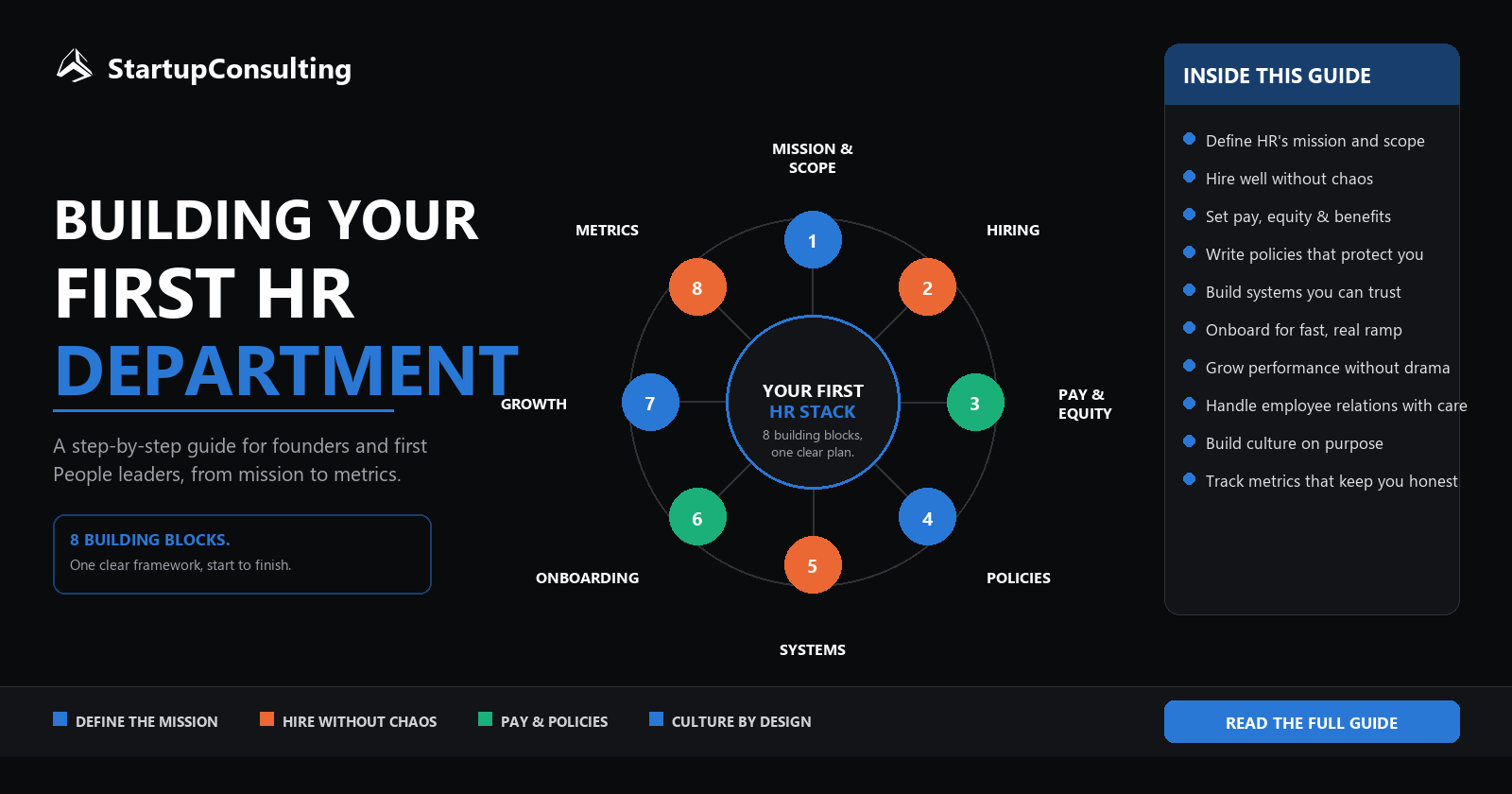
Your product might sparkle and your pitch might sing, but without a functioning HR backbone your startup will wobble like a three legged stool. This guide gives founders and first People leaders a practical roadmap for building people operations that supports growth without drowning the team in paperwork. We will keep things clear and a little playful, so you can move from ad hoc favors to reliable systems with minimal drama.
If you already lean on startup consulting for finance or go to market questions, you will feel right at home applying the same discipline to people. The plan is to keep it lightweight, practical, and kind to your calendar and budget. No fluff, just utility.
Define The Mission And Scope of HR
Every strong function starts with a purpose. Decide why HR exists in your company before you decide what it does. Early on, focus on hiring great people quickly, staying compliant, and shaping a culture where people do their best work. Write the mission, share it with the leadership team, and use it to prioritize.
Right size the scope to your stage. HR for five people is not HR for fifty. Ask what will break next as you grow. Maybe it is scheduling interviews, tracking time off, or capturing feedback. Build the next most valuable thing, then stop.
~5 People
~15–25 People
50+ People
Hire Well Without Chaos
Recruiting, or talent acquisition, is often the first operational pain, so design your hiring process to work at speed without losing quality. The goal is repeatable decisions you would be proud to explain.
Define Roles With Clarity
Write a one page role scorecard that lists mission, outcomes, and core competencies. Replace fluffy adjectives with observable behaviors. If you cannot describe the work in clear language, you are not ready to hire.
Build a Simple, Fair Pipeline
Choose a light applicant tracking system, set a consistent interview loop, and assign decision owners. Document what good looks like and how interviewers should test for it. Calibrate early so signals stay strong.
Make Offers That Close
Create a standard offer template and a quick approval path. Share realistic growth paths and learning opportunities. Candidates want to know how they will win, not just what they will earn.
Compensation, Benefits, and Equity
Money conversations can tangle even seasoned teams. Set up your total rewards, pay, equity, and benefits together, to be transparent enough to build trust and flexible enough to attract talent.
Create a Compensation Philosophy
State how you benchmark the market, how you use levels, and how you balance cash with equity. Decide whether you pay at the 50th percentile, or the 75th, and why. Publish this internally so managers do not improvise.
Structure Equity and Refreshes
Define standard grant sizes by level and role. Set a refresh rhythm that rewards impact without turning every one on one into a negotiation. Keep vesting simple and explain it in plain English.
Offer Benefits People Actually Use
Start with must haves like health coverage, paid time off, and local statutory benefits. Add small, high value perks such as learning stipends or ergonomic gear. Perks should support performance, not become a lifestyle magazine.
Must-haves
Health coverage, statutory benefits, and any legally required basics come first.
Time off
Paid time off and leave policies that keep the team rested and compliant.
High-value perks
Learning stipends, ergonomic gear, or other small perks that support performance.
Policies That Keep People Safe and Sane
Policies do not have to feel like a rule book in a school hallway. Good policies are crisp, humane, and easy to find.
Write a Lightweight Handbook
Collect policies into an employee handbook that lives in a versioned document, not a stack of one-off emails. Use plain language, short paragraphs, and examples. Cover code of conduct, time off, remote work etiquette, and expense rules.
Set Clear Work Norms
State expectations for response times, meeting etiquette, and decision making. Clarify how managers track outcomes instead of activity. When norms are explicit, people can relax and focus.
Systems and Data You Can Trust
HR is messy when data is scattered. Control the sprawl early so you can answer simple questions without treasure hunts.
Pick a Core System of Record
Adopt a basic HR information system (HRIS) as your source of truth for people data, whether you run it yourself or hand the day-to-day to an outsourced HR partner. Map how it connects to payroll, benefits, and your org chart.
Standardize Documents and Access
Create templates for offers, amendments, and policy acknowledgments. Store everything in one secure place with role based permissions. Audit access quarterly.
Onboarding That Speeds Up Trust
Great onboarding turns strangers into teammates. Design your employee onboarding process like a product launch, with clear owners and milestones.
Prepare Before Day One
Send a welcome note, equipment checklist, and a short reading list on culture and goals. Assign a buddy who can answer the questions people are shy to ask.
Craft a 30 60 90 Plan
Give new hires a plan with learning goals, deliverables, and check in dates at 30, 60, and 90 days. Managers should own the plan and update it together with the new hire.
Day 1
Welcome note, equipment ready, buddy assigned.
Day 30
Learning goals met, first small deliverables shipped.
Day 60
Manager check-in confirms real deliverables landing.
Day 90
Full ownership of the role, plan reviewed together.
Performance and Growth Without Drama
People join startups to grow. Your performance management approach should make that growth visible and supported.
Set Clear Goals and Feedback Loops
Use a simple goal system and monthly check ins. Teach managers to give specific, behavior based feedback. Praise in detail and redirect with examples.
Build a Lightweight Review Cycle
Run a brief biannual review that captures achievements, growth areas, and compensation decisions. Keep forms short, train managers on bias, and close the loop.
Invest in Managers Early
First time managers need training on coaching, delegation, and hiring. Give them a common toolkit and a community to practice.
Employee Relations and Wellbeing
Even the best teams hit bumps. Prepare to handle sensitive issues with care and speed.
Establish Trusted Reporting Channels
Provide multiple ways to raise concerns, including an option that bypasses a direct manager. Respond quickly and document the process.
Handle Investigations With Integrity
Define a consistent approach for intake, assessment, and outcomes. Keep confidentiality tight and communicate what you can.
Support Mental Health and Balance
Offer access to counseling resources where available, share flexible work practices, and train managers to spot burnout.
Build Culture With Intention
Workplace culture forms whether you design it or not. Better to design it.
Write Down Values That Sound Like You
Make values memorable and practical. Trade vague poetry for sentences people can use in decisions.
Rituals That Reinforce What Matters
Create small, repeatable moments that reflect your values, such as demo days, learning hours, or customer story sessions. Keep rituals inclusive and easy to run.
Metrics That Keep You Honest
What you measure tells people what to care about. Choose HR metrics and people analytics that reward healthy behavior, not busywork.
Track a Few Meaningful Numbers
Watch time to hire, offer acceptance rate, ramp time, regretted attrition, and engagement pulses. Use trends to guide your next quarter of work.
Share Outcomes, Not Just Outputs
Report what changed, not only what you did. Leaders should hear that onboarding cut ramp time or that manager training lifted engagement.
Metrics That Keep You Honest
Track a few numbers that reflect real outcomes (not busywork). Review monthly; act quarterly.
| Metric | What it tells you | How to measure (simple) | What to do if it’s off |
|---|---|---|---|
|
Time to hire
Speed of recruiting without chaos
|
Whether your hiring process is moving or stuck in slow loops. | Days from job posted → accepted offer (track median). | Tighten interview loop, clarify decision owner, improve scorecards. |
|
Offer acceptance rate
Competitiveness + candidate experience
|
Whether you’re closing the people you want (and why you’re losing them). | Accepted offers ÷ total offers (by role/level). | Improve comp clarity, speed approvals, sharpen pitch + growth path. |
|
Ramp time
Onboarding effectiveness
|
How fast new hires become productive contributors. | Time to first meaningful deliverable + manager confidence check at 30/60/90. | Fix pre-day-one prep, add buddy system, strengthen 30/60/90 plans. |
|
Regretted attrition
Loss of people you wanted to keep
|
Whether you’re retaining high performers and key roles. | Count of “wish we kept them” departures ÷ total headcount (quarterly). | Run stay interviews, upgrade manager coaching, review comp/equity fairness. |
|
Engagement pulse
Team health + morale trends
|
Early signal of burnout, trust issues, or leadership misalignment. | Monthly 3–5 question survey (e.g., clarity, workload, manager support). | Share themes, pick 1–2 actions, report progress next pulse. |
|
Outcome reporting
Outputs vs actual impact
|
Whether HR work is improving the business, not just creating artifacts. | 1-page monthly recap: “what changed” + evidence (trend lines, anecdotes). | Stop vanity projects, focus on bottlenecks, measure before/after. |
Know When to Scale HR
At some point your part time HR work will need full time focus. Signs include missed items from your HR compliance checklist, hiring bottlenecks, or managers struggling without support, all classic workforce planning gaps. When the basics stay stable for two quarters and you can see the next wave of growth, hire a People leader who can build the next layer.
Conclusion
HR, or people operations, is the quiet system that shapes the employee experience, lets talent shine, keeps customers happy, and helps founders sleep through the night. Start with purpose, build only what you need, teach managers to lead well, and keep the data tidy. Do those things consistently and your first HR department will feel less like red tape and more like rocket fuel.
Put this into practice with AI
This article is for general information only and is not legal, tax, accounting, HR, or investment advice. Consult a qualified professional for your specific situation.
Related reading
 HR
HRThe Complete HR Compliance Checklist for New Companies
A complete HR compliance checklist for startups, covering hiring, payroll, policies, and legal essentials to keep your new company compliant.
Read article HR
HROutsourcing HR for Startups: What It Costs and When It Makes Sense
Learn when HR outsourcing makes sense for startups, what it costs, and how the right partner streamlines hiring, compliance, and daily operations.
Read article HR
HREmployee Equity vs. Cash Compensation: What Founders Need to Know
Learn how founders can balance equity and cash compensation to attract talent, manage runway, and build a fair, sustainable startup culture.
Read article