
How To Structure Your Startup For Maximum Tax Efficiency
Launching a company feels like sprinting while assembling the treadmill beneath your feet. You juggle product tweaks, investor coffees, and a to-do list that reproduces like rabbits after espresso. One choice, however, shapes your long-term finances more than any late-night code push: the legal and tax structure you pick on day one.
Seasoned founders lean on startup consulting pros for this puzzle, yet you can grasp the essentials right now—saving real dollars before the taxman can schedule his victory lap.
Choosing The Right Entity Type
Sole Proprietorship Versus Partnership
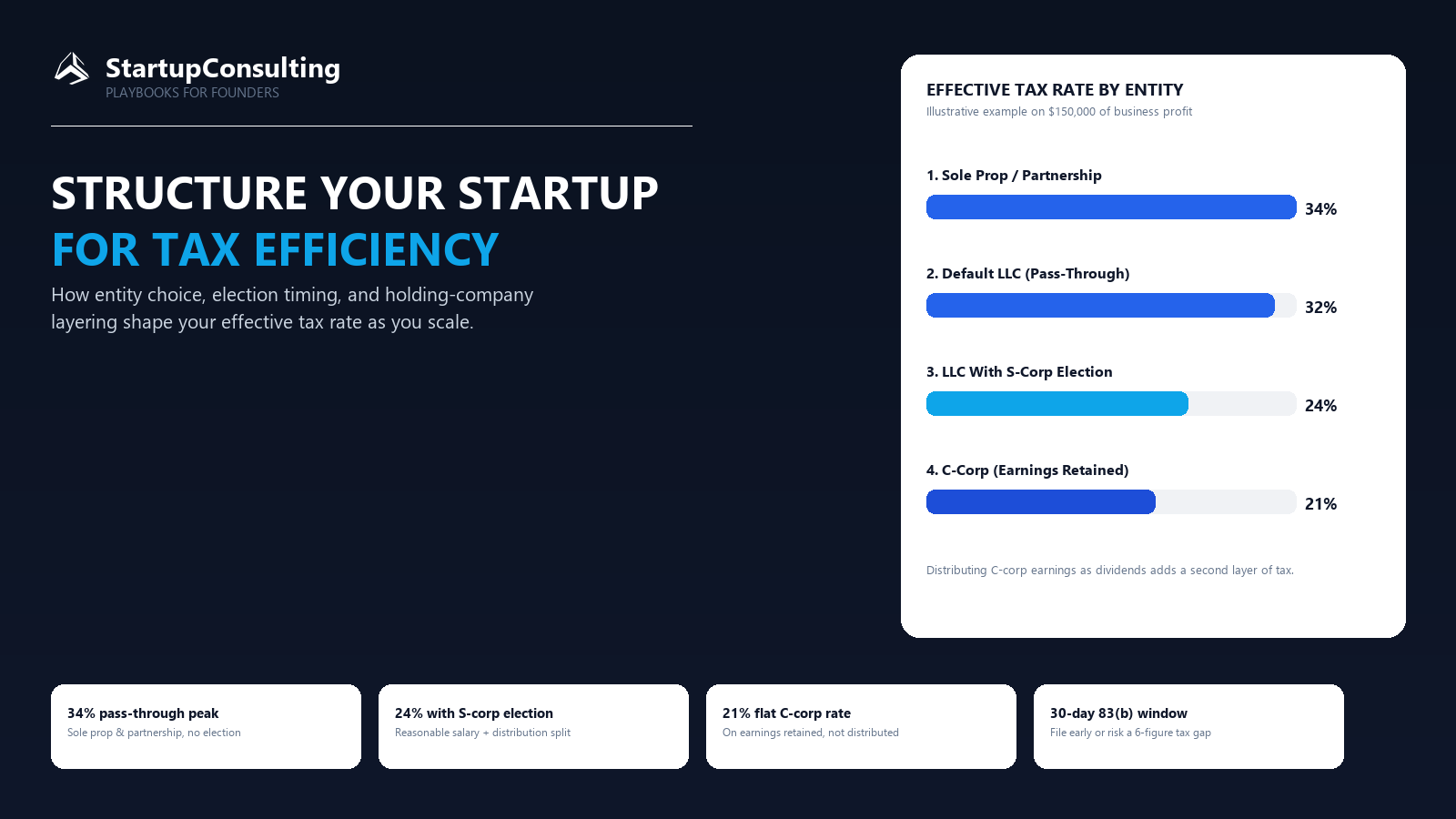
Many entrepreneurs default to a sole proprietorship because it is fast and cheap. Still, that simplicity carries full personal liability and offers no real path to equity for co-founders. Partnerships share the burden but create joint responsibility for every business misstep. Both structures pass profits straight to owners, potentially yawning the door open for self-employment taxes that devour precious runway funds.
Why LLCs Dominate The Early Days
A Limited Liability Company marries flexible management with a liability shield sturdier than a medieval tower. Better yet, an LLC enjoys “check-the-box” classification. You can remain a disregarded entity, elect partnership taxation, or graduate to S-corporation status later. That adaptability lets you postpone the heavy paperwork until revenue justifies the hassle, keeping your burn rate lean without locking you into an awkward structure.
Timing Your Election For S Corporation Status
Salary Versus Distribution Balancing Act
S-corp owners can split income between payroll wages and profit distributions. Wages attract payroll taxes; distributions skip them. Set salaries too low, though, and the IRS raises an eyebrow. Aim for a figure that mirrors what you would pay an outsider to perform the same duties. The sweet spot turns the payroll tax knob down without triggering an audit siren.
Because your entity choice determines which side of that split even exists, it is worth reading our breakdown of salary versus dividends for founders before you lock in a number, especially if you are still weighing an entity conversion from a default LLC into S-corp status.
Avoiding Reasonable Compensation Pitfalls
Document why your salary is fair. Capture job boards showing market pay, retain offer letters for similar roles, and keep minutes noting board approval. When the IRS asks why your paycheck looks like a teenager’s allowance, you will produce evidence instead of sweaty excuses.
The C Corporation Trade-Off
Qualified Small Business Stock Perks
C-corp shares may qualify for Section 1202 benefits if held over five years, wiping out capital gains on sale up to hefty limits. For ambitious startups eyeing an explosive exit, that exclusion turns equity into near-magical currency. Stock options granted to early employees also receive clean, predictable treatment under a C-corp, smoothing talent acquisition.
Double Taxation Mitigation Strategies
Yes, C-corps face tax at two levels, but careful planning reduces pain. Retain earnings to fund growth instead of distributing dividends. Offer tax-deductible benefits like health plans and education assistance. Pay founders reasonable salaries to shift taxable profit from the corporate block to the individual rate where brackets may be friendlier.
Many founders start life as a default LLC and only pursue a formal entity conversion into an S-corp or a Delaware C-corp once the numbers justify it. Getting S-corp election timing right, and understanding how multi-entity structuring interacts with an eventual IP holding company, both hinge on seeing the effective tax picture side by side across structures.
Layering Holding Companies And Subsidiaries
Shielding Intellectual Property
Create a parent entity to own patents and trademarks, then license them to the operating subsidiary. If the operating company ever plunges into litigation lava, your crown jewels stay protected in the holding company’s high tower. Licensing fees flow up as deductible expenses, trimming taxable income where it is exposed.
Managing Multistate Tax Exposure
A nested structure allows you to cordon off activities by state. Run sales operations in jurisdictions with favorable apportionment rules while sheltering administration in a no-income-tax state. Each subsidiary files locally, limiting where revenue nexus can materialize, and that containment keeps compliance headaches from spreading like glitter at a craft fair.
| Structure Element | How It Works | Tax or Risk Benefit | Example in Practice |
|---|---|---|---|
| Parent Holding Company | A top-level entity owns the equity of one or more operating subsidiaries and may also hold key assets such as trademarks, patents, or software code. | Creates separation between strategic assets and day-to-day business liabilities, which can improve protection and long-term planning flexibility. | A startup forms a parent entity that owns both its software IP and the stock of its revenue-generating operating company. |
| Operating Subsidiary | The operating subsidiary signs customers, hires employees, incurs vendor obligations, and runs the daily business. | Helps contain commercial risk so lawsuits, contract disputes, or operating losses are less likely to reach the entity holding crown-jewel assets. | Customer contracts and payroll sit inside the operating company, while the parent remains one step removed from those liabilities. |
| IP Holding Layer | Patents, trademarks, copyrighted material, or software assets are housed in a separate entity and licensed to the operating company. | Can help shield intellectual property from operating company claims while also creating deductible royalty or licensing flows, depending on the structure and jurisdiction. | A parent company licenses the brand and software platform to the operating subsidiary in exchange for an intercompany fee. |
| Intercompany Licensing | The operating subsidiary pays the holding company for the right to use IP or other shared assets under a written intercompany agreement. | May reduce taxable income in the operating entity while moving value to the entity that owns the protected asset, provided pricing and documentation are defensible. | The operating business deducts software licensing costs, while the holding company reports the related royalty income. |
| State-by-State Subsidiaries | Separate subsidiaries may be used for operations in different jurisdictions, especially when sales, payroll, or compliance obligations vary significantly by state. | Can help isolate nexus, simplify local filings, and reduce the spread of compliance problems across the entire business. | A company runs one sales entity in a high-growth state and a separate administrative entity in a more tax-friendly jurisdiction. |
| Liability Ring-Fencing | Each subsidiary is structured to contain a specific business function, geography, or asset category so risk is not pooled unnecessarily. | Limits the chance that one bad contract, dispute, or regulatory issue affects unrelated assets or lines of business. | A product liability issue in one subsidiary does not automatically threaten the IP entity or a separate subsidiary serving another market. |
| Documentation and Pricing Discipline | Intercompany agreements, transfer pricing logic, board approvals, and accounting entries should be documented clearly and maintained consistently. | Reduces audit risk and makes the structure easier to defend if tax authorities or investors ask why money and assets move between entities. | The company keeps signed license agreements, board minutes, and accounting support showing how intercompany charges were calculated. |
| Complexity Tradeoff | More entities mean more filings, bookkeeping, governance, and compliance work across legal, tax, and accounting functions. | The structure only pays off when the protection, tax planning, or operational clarity outweighs the added administrative burden. | A founder may benefit from a layered structure once valuable IP, multi-state activity, or meaningful liability exposure justifies the extra upkeep. The best version is usually the simplest one that still protects what matters most. |
Choosing Your Physical And Virtual Nexus
State Selection For Income Taxes
Incorporating in Delaware remains popular, but the state where real work happens still claims tax rights. Some jurisdictions lure startups with zero corporate income tax or credits for research hiring. Compare franchise fees, annual reporting costs, and legal environments before planting your flag. A slightly higher filing fee upfront may save thousands every year thereafter.
If a Delaware C-corp is part of your plan, budget for the franchise tax bill separately from income tax: our Delaware franchise tax guide for founders walks through how the state calculates that annual charge and how the entity choices above affect your tax nexus exposure once you are registered to do business in multiple states.
Sales Tax And Marketplace Facilitator Rules
Selling digital goods seems borderless until you discover economic-nexus thresholds. Exceed a sales or transaction limit and you owe collection duty in that state. Implement a tax engine early, or risk a retroactive bill hefty enough to make your bookkeeper faint. Physical presence is no longer required; revenue alone can trigger obligations, so monitor thresholds like you track daily active users.
Capital Structure And Share Classes With Tax In Mind
Convertible Instruments And SAFE Notes
Raising pre-seed cash often involves Simple Agreements for Future Equity or convertible notes. These instruments delay valuation while funding progress. From a tax angle, they postpone recognition events for investors, making the deal sweeter. As the issuer, maintain clear cap-table models so conversion does not spawn surprise ownership percentages or built-in gain traps down the road.
Vesting Schedules That Save Taxes
Four-year vesting with a one-year cliff keeps early hires motivated and guards against free-riding. For founders, filing an 83(b) election within thirty days of share grant locks in the present-value basis. Pay income tax on pennies now instead of dollars later when the shares appreciate. Miss the deadline and you will owe ordinary income tax every time a tranche vests, which feels like paying cover charge at your own birthday party.
International Expansion Early Considerations
Controlled Foreign Corporation Rules
Open an overseas subsidiary too casually and you may wander into Subpart F income territory, where certain foreign profits flow straight onto your personal return. Establish genuine local operations, appoint resident directors, and price intercompany services at arm’s length. Skipping these steps invites penalties fiercer than airport passport lines on holiday weekends.
Transfer Pricing Done Right
When intellectual property or services cross borders, so should revenue. Draft transfer-pricing studies that explain your chosen methodology. Document comparable transactions, justify royalty percentages, and keep reports refreshed annually. Solid paperwork turns cross-border payments into deductible expenses abroad and taxable income where rates may be lower, reducing the global effective rate with surgical precision.
Documentation And Governance
Operating Agreements And Shareholder Minutes
The IRS and state examiners trust what is written, not what founders remember. Record capital contributions, profit-sharing ratios, and officer elections in formal minutes. Operating agreements should outline distribution policies and buy-sell mechanisms. Banks and investors view tidy governance as a signal of professionalism; regulators see it as proof you are not hiding income under your pillow.
Accounting Systems That Tell Your Story
Choose software that syncs with bank feeds and categorizes expenses automatically. Set up a chart of accounts that mirrors your growth strategy: one bucket for R&D, another for marketing, and a breakout for each subsidiary. When tax season strikes, you can pull clean reports instead of digging through shoeboxes of receipts like a detective in a paper blizzard.
Conclusion
Structuring your startup is more than paperwork; it is a strategic lever that can lift or crush your financial future. By weighing entity options, timing elections wisely, protecting intellectual property, and documenting every step, you convert tax rules from obstacles into allies.
Treat your structure as a living blueprint, revisit it at each funding round, and consult professionals before leaping across borders or thresholds. A well-designed framework keeps more capital fueling innovation and less lining government coffers, setting the stage for growth stories worth bragging about at the next founder meetup.
Put this into practice with AI
This article is for general information only and is not legal, tax, accounting, HR, or investment advice. Consult a qualified professional for your specific situation.
Related reading
 Tax
TaxHow to Stay Audit-Proof: Startup Tax Compliance Made Simple
Stay audit-proof with simple startup tax habits. Learn to organize records, meet deadlines, and reduce audit risk while keeping founders sane and funded.
Read article Tax
TaxWhat Every Founder Should Know About Delaware Franchise Tax
Delaware franchise tax explained for founders, including calculation methods, deadlines, and smart ways to avoid costly surprises each year.
Read article Tax
Tax5 Ways to Reduce Your Startup’s Tax Burden Before Year-End
Five practical year-end tax strategies for startups to cut liabilities, improve cash flow, and keep more capital working before December 31.
Read article