
Burn Rate, Runway, and Cash Flow: Financial Metrics Every Founder Should Track
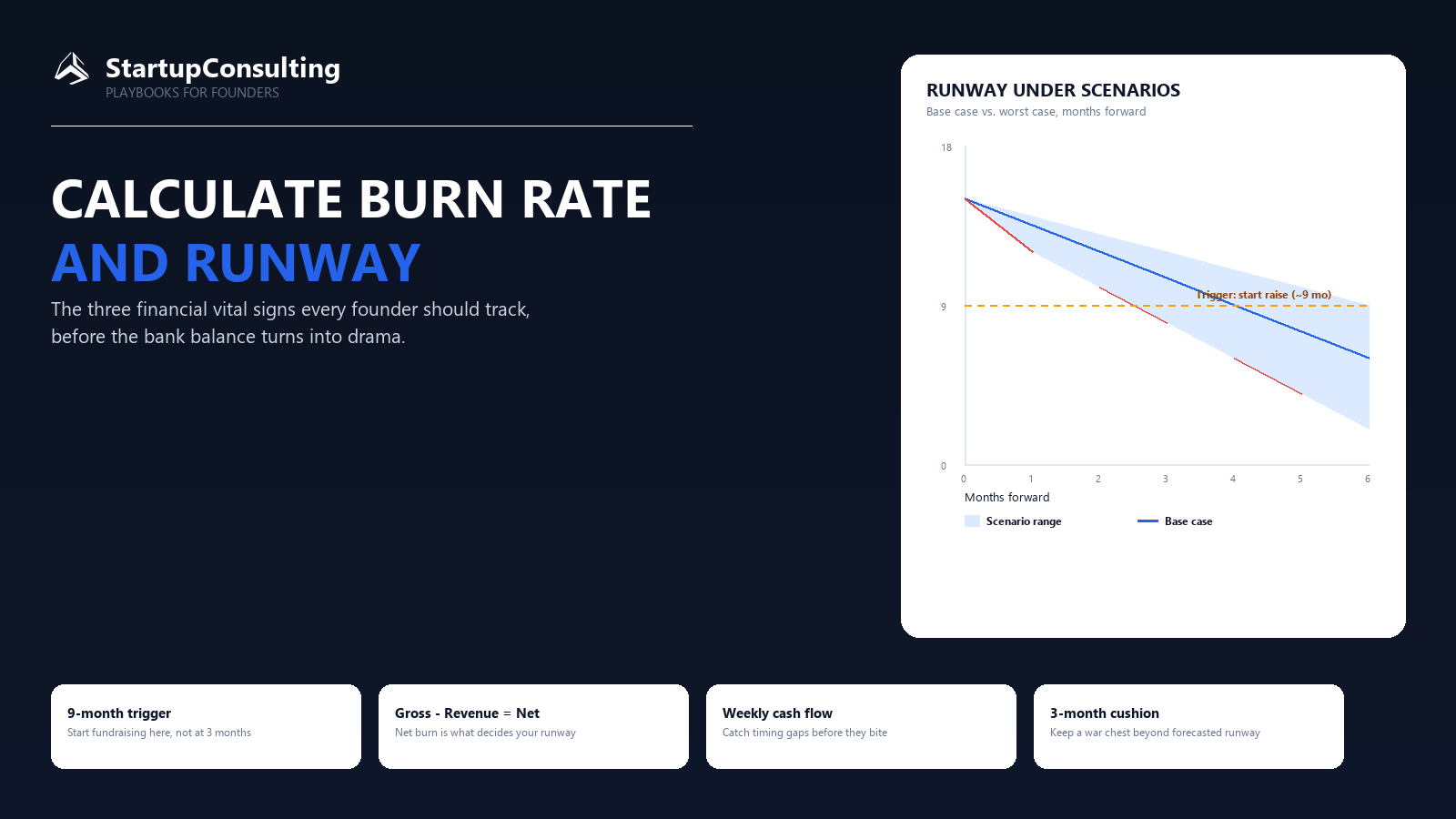
Every founder holds a secret playlist of anxieties. High among them is the quiet fear of the bank balance drifting toward zero while growth charts still dream of hockey sticks. To keep that nightmare at bay, leaders rely on three deceptively simple startup financial metrics: burn rate, runway, and cash flow. Dial them in and you steer with confidence. Ignore them and you stumble in the dark.
In the world of startup consulting, pros treat these metrics like vital signs. Below we unpack what they mean, why they matter, and how to use them so investors nod and teams sleep at night.
Why Financial Vital Signs Trump Vanity Metrics
Revenue, downloads, and social buzz can inflate egos, yet none guarantee survival. Burn rate, runway, and cash flow reveal whether hype translates into staying power. They strip away sentiment and expose the underlying health of operations. Understanding them early lets founders shift from reactive panic to proactive strategy.
Burn Rate: The Speedometer of Spending
Your startup burn rate tells you how fast cash exits the building. Think of it as your startup’s fuel consumption gauge. It measures the net outflow per month, capturing every cost from cloud credits to the burritos that power hackathons.
Runway: The Calendar of Calm or Crisis
Startup runway converts burn into time. It shows how many months you have before cash hits zero. Many founders track runway like gamers watch health bars. A healthy buffer buys freedom to experiment. A short bar demands urgent decisions.
Cash Flow: The Story Behind the Numbers
Cash flow ties the first two together. Even profitable companies can die from poor cash flow timing if invoices lag or suppliers demand early payments. Tracking cash flow illuminates mismatches you need to solve long before the bank account flashes red.
| Metric type | Examples | What it answers | Why founders get misled | What to track instead (actionable) |
|---|---|---|---|---|
| Vanity metrics | Downloads Followers Pageviews Press mentions “Pipeline” count |
“Are we getting attention?” “Is momentum visible?” |
They can grow while the business stays unhealthy: low conversion, weak retention, long payment terms, or rising costs. easy to inflate weak signal | Pair any top-of-funnel metric with a “money consequence”: CAC & payback activation→retention collections time |
| Burn rate | Gross burn Net burn | “How fast is cash leaving the building each month?” | Founders undercount “real” outflows (debt service, leases, annual tools) or treat spikes as one-offs. false confidence | Track both gross and net burn monthly, plus driver breakdown: headcount cloud marketing one-time items |
| Runway | Months of cash remaining at current net burn | “How much time do we have before we must raise, cut, or grow revenue?” | Runway shrinks when burn rises. Hiring bursts, launches, and seasonality change the denominator. dynamic risk | Track runway under scenarios: base growth spend worst-case and set triggers (e.g., start fundraising at ~9 months). |
| Cash flow | Weekly cash in/out, receivables, payables timing | “Will we have cash when bills hit—even if revenue ‘looks’ fine?” | Revenue recognition ≠ cash collected. Slow invoices, upfront supplier payments, or inventory can starve you. timing kills | Maintain a simple weekly direct cash report: collections payroll vendors taxes plus AR aging and “next 30 days” obligations. |
| Outcome framing | Turning metrics into decisions and investor trust | “What do we do next—and how do we explain it credibly?” | Teams watch dashboards but don’t attach actions to thresholds. metrics theater | Tie each vital sign to a playbook: burn → hiring gates, runway → fundraising start, cash flow → AR/terms fixes, with owner + cadence. |
Calculating Burn Rate With Precision
An accurate burn rate calculation starts with clean books. Separate fixed costs, such as salaries and rent, from variable costs tied to revenue fluctuations. Then subtract total monthly cash inflows from total outflows. The result, positive or negative, is your burn. In early stages burn is nearly always negative. The goal is not zero burn overnight but a predictable figure you can explain to investors.
Getting that fixed-versus-variable split right in year one is largely a budgeting exercise, not just an accounting one. This practical guide to allocating your first year of capital walks through how to size each bucket before you ever plug a number into a burn calculation.
Gross Versus Net Burn
Gross burn equals total cash spent each month. Net burn subtracts operating revenue from that spend. Net burn is the number that really matters for runway, but tracking both reveals efficiency trends. If gross burn climbs but net burn falls because revenue grows faster, you are moving in the right direction.
Common Pitfalls
Founders sometimes exclude financing activities such as debt payments or equipment leases, assuming they are one-offs. Investors notice the omission and question credibility. Capture every dollar out the door to keep trust intact.
Turning Burn Into Runway
Runway equals current cash divided by net monthly burn. For example, two million in the bank and a two-hundred-thousand net burn yields ten months. Simple enough, yet many overlook how dynamic burn shifts the denominator.
Seasonality and Growth Spurts
Product launches, marketing pushes, or hiring bursts can spike burn unexpectedly. Build models that forecast these events and simulate worst-case scenarios. This preparation prevents rude awakenings when cash drains faster than expected.
Navigating Fundraising Cycles
Plan to kick off your next raise when runway reaches nine months, not three. Fundraising often drags beyond optimistic timelines. Starting early preserves negotiation leverage. Waiting until cash is scarce signals desperation and invites harsh terms. Before you kick off that raise, make sure your books are fundraise and exit ready, since investors will pressure-test both your runway and your ledger in the same sitting.
Cash Flow: The Pulse You Cannot Ignore
Startup cash flow management measures movement of money in real time. The income statement may show profit, yet cash flow exposes whether customers actually paid. Tracking cash flow weekly reveals emerging bottlenecks long before monthly statements arrive.
Direct Versus Indirect Method
Early stage firms favor the direct method: list cash received and cash spent. As you mature, accountants convert to the indirect method, reconciling net income to cash. Founders should grasp both, yet keep a simple direct report close for day-to-day steering.
Managing Receivables and Payables
Slow-paying customers stretch cash flow thin. Offering small discounts for early payment often costs less than bridging with debt. On the flip side, negotiating extended payment terms with suppliers lengthens cash cushion without cutting spend. Effective finance teams juggle these levers to smooth out volatility.
Linking Metrics to Operating Decisions
A solid financial metric is only useful if it triggers action. Use burn, runway, and cash flow to guide hiring, pricing, and expansion.
Hiring With Eyes Wide Open
Before adding headcount, model the effect on burn and runway. A senior engineer may accelerate product delivery, shortening time to revenue. If that acceleration offsets salary within a reasonable window, green light. If not, delay.
Pricing Changes and Cash Dynamics
Raising prices may boost revenue, slashing net burn, yet it could also lengthen sales cycles, delaying cash inflows. Test price hikes on a subset of customers and track cash flow impact before a full rollout.
Geographic Expansion
Entering a new market often demands upfront spend on localization, regulatory filings, and support. Forecast how these costs hit burn and adjust runway expectations. When cash flow stabilizes, expansion risk drops.
Tools That Simplify Tracking
Spreadsheets work at seed stage, but dashboards soon pay for themselves. Software that integrates banking, accounting, and invoicing automates real-time visibility.
Dashboards for Burn and Runway
Set alerts for burn spikes or runway dipping below a threshold. Seeing numbers update daily keeps leadership grounded in reality, not wishful thinking.
Cash Flow Forecasting Apps
Several tools project cash flow based on historical patterns. They flag gaps months ahead, allowing you to arrange bridge financing or cut costs without drama.
Investor Communication: Turning Metrics Into Trust
Transparent updates earn goodwill even when numbers disappoint. Share monthly burn, runway, and cash flow projections in a concise table. Explain variances and corrective actions. Consistency signals professionalism and often accelerates future raises.
Framing Negative Surprises
If burn jumps because of a product pivot, own the narrative. Highlight the expected revenue uplift and timeline to return burn to prior levels. Investors value candor more than perfection.
Showcasing Operational Wins
When cash flow improves due to process tweaks, detail them. Maybe a new billing system shaved days off collection. This storytelling reinforces confidence in management’s agility.
Stress-Testing Your Financial Health
Run simulations on burn and cash flow under worst-case conditions: delayed fundraise, market downturn, or customer churn spike. Stress tests guide contingency planning.
Scenario Planning With Board Input
Involve board members in constructing stress scenarios. Their experience often surfaces overlooked risks. Aligning on contingency plans beforehand prevents panic later.
Maintaining a War Chest
Whenever possible, keep at least three months of additional cash beyond forecasted runway. Treat it as non-negotiable insurance. If that cushion shrinks, prioritize replenishing it before discretionary spending.
Burn Rate Benchmarks and Industry Context
Burn expectations vary by sector. A deep-tech startup layering hardware and R&D spends differently than a pure software play. Know the norms to avoid over-spending or under-investing.
SaaS Companies
Typical early stage SaaS firms run net burn equal to one half of annual recurring revenue, gradually improving as scale drives efficiency.
E-Commerce Ventures
Inventory purchases can distort burn calculation. Separate working capital needs from operating burn to reveal true efficiency.
Health Tech Startups
Regulatory approvals extend revenue timelines. Higher burn for longer periods may be justified if milestones are met. Investors will accept this when forecasts remain transparent.
Building a Culture of Financial Discipline
Metrics influence behavior only when embraced across the organization. Educate teams on the link between their work and burn or cash flow.
Departmental Ownership
Give department heads monthly visibility into their contribution to burn. Marketing learns to weigh acquisition spend against payback. Engineering grasps how shipping features sooner shortens time to cash.
Gamifying Efficiency
Celebrate wins like trimming hosting costs through smarter architecture. Turning savings into visible victories fosters pride rather than frugality fatigue.
Conclusion
Burn rate, runway, and cash flow management are not just figures for slide decks. They are living feedback loops guiding every crucial decision, from the coffee you buy to the markets you pursue. Track them with rigor, interpret them honestly, and your startup earns the breathing room to innovate instead of firefight. That vigilance separates ventures that merely launch from those that last.
Put this into practice with AI
This article is for general information only and is not legal, tax, accounting, HR, or investment advice. Consult a qualified professional for your specific situation.
Related reading
 Finance
Should You Pay Yourself a Salary or Dividends as a Founder?
Founder pay explained: compare salary vs dividends, tax impacts, compliance rules, and cash flow tradeoffs to choose the smartest compensation mix.
Read article Finance
5 Common Accounting Mistakes That Sink Startups
Learn five common accounting mistakes sink startups and how to avoid them with simple routines that protect cash, taxes, runway, and investor trust.
Read article Finance
When to Switch from Cash to Accrual Accounting (and Why It Matters)
Learn when and why to switch from cash to accrual accounting, how it transforms your reports, and the key signals that show your business is ready to upgrade.
Read article