
Avoiding Founder Disputes: Legal Best Practices for Early Teams
Launching a company with friends feels like assembling a rocket in your living room while the neighbors keep asking what that strange humming sound is. The adrenaline keeps everyone buzzing, the pizza boxes pile up, and nobody wants to pause to discuss bylaws or buy-sell clauses. Yet those supposedly boring documents decide whether your friendship survives Series A or disintegrates before demo day.
A few clear rules drafted now will outshine any motivational poster when tension hits. Think of this playbook as a quick shot of Startup Consulting wisdom on avoiding founder conflict: short, strong, and designed to keep the peace while you chase product-market fit. Most founder disputes trace back to a small handful of root causes, and every one of them is preventable with the right paperwork drafted early.
Clarify Roles and Commitments
Define Roles on Paper
Early teams often run on caffeine and assumption. One founder thinks she owns marketing because she tweeted twice, while another believes product includes engineering, design, and coffee runs. Write a simple roles matrix, sometimes called a roles and responsibilities agreement, that spells out primary duties, decision authority, and backup coverage during vacations. When responsibilities live in writing, nobody can later claim the position they secretly coveted.
Update the file whenever the business pivots so titles match real work, not aspirational LinkedIn headlines. Clarity here prevents turf wars that drain time better spent courting users. Your future investors will thank you for the organizational maturity, even if the document started as a shared spreadsheet. Documented clarity today prevents volcanic emails at midnight tomorrow.
Agree on Workload and Hours
Co-founders rarely share identical life rhythms. One thrives on sleepless sprints, another guards family dinner like sacred ritual. Misjudge this mismatch and frustration festers faster than unreviewed pull requests. Hold an honest conversation about weekly hour expectations, weekend availability, and blackout periods. Put the consensus into the co-founder agreement (or shareholder agreement) so everyone knows the stakes, including future hires.
Flexibility remains possible, but a baseline keeps legends of freeloading from poisoning Slack threads. Plus, when someone burns out, the document provides a reality check rather than a fuel can for gossip. Shared calendars beat passive aggressive sighs across the co-working table.
| Area to Clarify | What to Define | Why It Matters | Best Practice |
|---|---|---|---|
| Founder Roles | Primary duties, ownership areas, and backup responsibilities. | Prevents confusion over who owns product, sales, marketing, finance, or operations. | Create a written roles matrix and update it when the startup pivots. |
| Decision Authority | Which founder can make decisions in each business function. | Reduces bottlenecks and avoids power struggles over routine choices. | Assign clear decision lanes for product, hiring, spending, partnerships, and customer commitments. |
| Workload Expectations | Weekly hours, sprint intensity, response times, and baseline availability. | Keeps one founder from feeling like they are carrying the company alone. | Document expected contribution levels in the founder or shareholder agreement. |
| Availability Boundaries | Weekend work, family commitments, vacations, and blackout periods. | Helps founders balance urgency with sustainable working rhythms. | Discuss boundaries early and maintain a shared calendar for key availability limits. |
| Accountability | How progress is tracked and how missed commitments are handled. | Turns frustration into a process instead of personal conflict. | Use regular check-ins, written goals, and clear escalation steps when commitments slip. |
Structure Equity and Exit Paths
Tie Vesting to Contribution
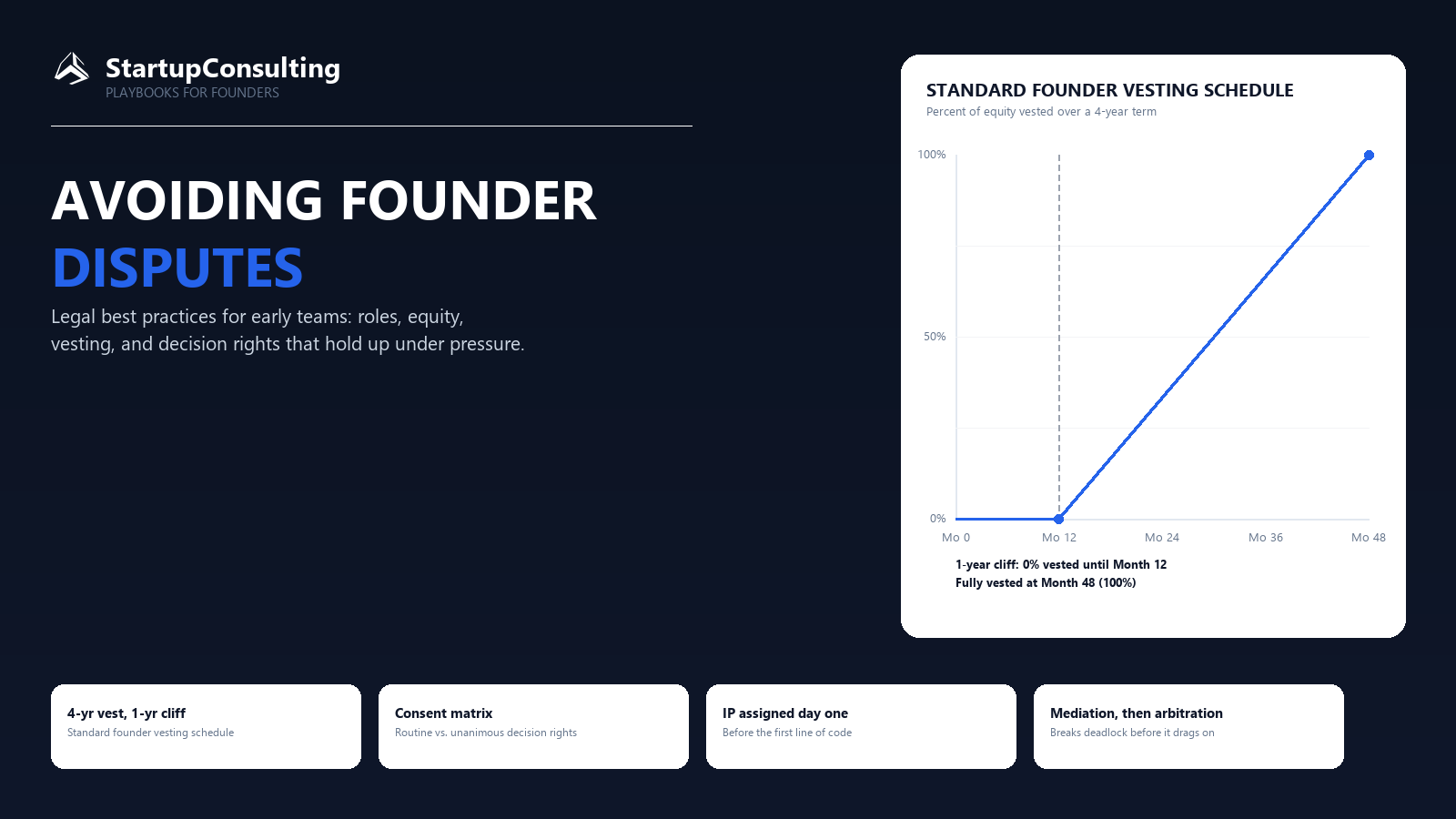
An equity split negotiation that ends in a reflexive fifty-fifty on day one feels romantic until someone ghosts the project six months later. Adopt a founder vesting schedule built on a four-year vest with a one-year cliff so stock follows sweat, not nostalgia. Single-trigger vesting acceleration on sale can sweeten the pot without letting early quitters coast. Getting the cliff and vesting acceleration terms right forces tough commitment talks before money clouds judgment.
It also signals to accelerators that you understand incentive mechanics better than weekend-MBA tourists. Most important, vesting lets remaining teammates replace a vacancy without handing a fortune to a spectator. Investors adore vesting charts that reward grit over lucky timing. Because a mishandled cliff or acceleration clause can trigger exactly the kind of high-stakes founder dispute this playbook is trying to prevent, this is where deciding whether to hire a startup attorney instead of using a generic template matters most.
Plan for Partial Departures
Startups seldom move in straight lines. A founder might relocate for family, develop a new passion, or simply lose interest. Draft buyout provisions (a buyback clause) that let remaining founders repurchase unvested shares at nominal value and vested shares at fair market price. This mechanism prevents a long-absent teammate from blocking licensing deals or future funding rounds.
Deciding the formula now spares everyone the agony of haggling during an already emotional exit. Investors reading your capitalization table will sleep easier knowing stale equity can be cleared away cleanly. Your friendship may even survive the transition, now that the money question is settled. Fair exits keep cap tables lean and friendships surprisingly intact.
Streamline Decision Making
Reserve Big Votes for Big Issues
Decision paralysis lurks when three people must unanimously approve every stapler purchase. Create a consent matrix listing which matters demand majority, supermajority, or unanimous approval. Routine expenses and hiring within budget can pass with a simple majority, while selling the company or issuing new shares should require full consensus.
This balance trims meeting bloat without stripping anyone of power over existential moves. Better yet, publish the matrix where the whole team can see it, so nobody claims ignorance after an awkward Slack poll. Clear lanes make for faster sprints and fewer bruised egos. A quick matrix now saves endless arguments about office-supply budgets.
Use Deadlock Breakers
Even best friends can lock horns over a strategic fork, and decision-making deadlock is one of the most common founder disputes to watch for. Insert mediation and arbitration clauses that trigger after a vote gridlocks twice. Mediation provides a neutral sounding board to untangle emotion from data, while arbitration delivers a binding decision before bitterness calcifies.
Knowing a final referee exists nudges everyone toward compromise instead of trench-digging. Keep deadlines tight so disputes cannot drag for quarters. Time spent feuding is time your competitors spend shipping. Deadlines motivate diplomacy, because no one likes arbitration holiday meetings.
| Decision Type | Individual Founder | Majority Approval | Supermajority Approval | Unanimous Approval |
|---|---|---|---|---|
| Routine Operating Expenses | Primary Within approved budget | — | — | — |
| Product Roadmap Changes | — | Primary Standard feature priorities | — | — |
| Hiring Within Budget | — | Primary Approved roles and compensation bands | — | — |
| Large Budget Changes | — | — | Primary Major spend or budget reallocations | — |
| Issuing New Equity | — | — | — | Primary Dilution-sensitive decision |
| Selling the Company | — | — | — | Primary Existential company decision |
Secure Company Assets
Assign Intellectual Property Upfront
Ideas have a habit of sticking to whoever thought of them unless paperwork says otherwise. Each founder should sign an intellectual-property assignment transferring all past and future inventions to the company. Do this before the first line of code so you never beg an ex-partner for a signature while due diligence ticks.
Clarify that forks, prototypes, and whiteboard photos are included, closing sneaky loopholes. Investors love startups that actually own their brains, and employees appreciate knowing who holds the crown jewels. Ownership alignment removes shadows that scare technical hires away.
Lock Down Confidential Information
Loose lips sink valuations. Create a mutual non-disclosure agreement that survives employment changes. List customer lists, source code, and growth spreadsheets as confidential, while Spotify playlists and cat memes remain fair game. Require departing founders to return laptops, badges, and prototype widgets within twenty-four hours to deter accidental souvenirs.
Add a liquidated-damages clause hefty enough to command respect but not so draconian that courts laugh. Protecting secrets is cheaper than scrambling for new ones after a leak. Secrecy protocols stand guard while you sleep and servers hum.
Maintain Corporate Hygiene
Keep Meeting Minutes
Board and founder huddles often feel like caffeine-fueled improv shows. Capture decisions in concise minutes noting date, attendees, motions, and vote results. Store them in a shared drive with version control so nothing mysteriously vanishes during a future blame game.
Minutes form the legal memory of the company, proving you followed your own rules if conflict reaches a courtroom. They also help absent-minded founders remember why they agreed to that 3 a.m. launch deadline. Minutes also remind future executives that the chaos was deliberate.
Refresh Agreements After Funding
Term sheets introduce new stakeholders who expect tighter governance. Revisit voting thresholds, vesting acceleration triggers, and confidentiality language after each round to align with incoming protections. Use legal counsel to tidy amendments rather than stuffing new promises into an email chain.
Treat every funding event like a software release: document, test, and deploy cleanly. Proactive cleanup earns goodwill with both investors and regulators, which pays dividends when you finally ring the bell on exit day. Clean paperwork is the flex that wows meticulous analysts. This is exactly the kind of proactive cleanup that shows up favorably during startup legal readiness for VC due diligence, since reviewers move faster when founder agreements are already airtight.
Conclusion
Founder conflict is not inevitable. Draft clear documents, revisit them as your rocket gains altitude, and respect the guardrails you built together. The effort takes an afternoon, the peace of mind lasts for years, and your future self will thank you when the cap-table arguments stay hypothetical. Less drama means more energy to wow customers and outpace rivals - exactly why you joined forces in the first place.
Put this into practice with AI
This article is for general information only and is not legal, tax, accounting, HR, or investment advice. Consult a qualified professional for your specific situation.
Related reading
 Legal
LegalWhen to Hire a Startup Attorney vs. Use Online Legal Templates
Decide when to hire a startup attorney vs use legal templates, balancing cost, risk, speed, and growth without risking investors, equity, or IP.
Read article Legal
LegalHow to Ensure Your Startup Is Legally Ready for VC Due Diligence
A practical, witty checklist to get your startup legally ready for VC due diligence, from cap tables and IP to compliance and data rooms investors trust.
Read article Legal
LegalEmployment Law Basics Every Startup Must Understand
Employment law basics every startup must know, from hiring and pay rules to compliance, IP protection, and avoiding costly legal mistakes.
Read article