
How to Draft an Investor-Ready Term Sheet
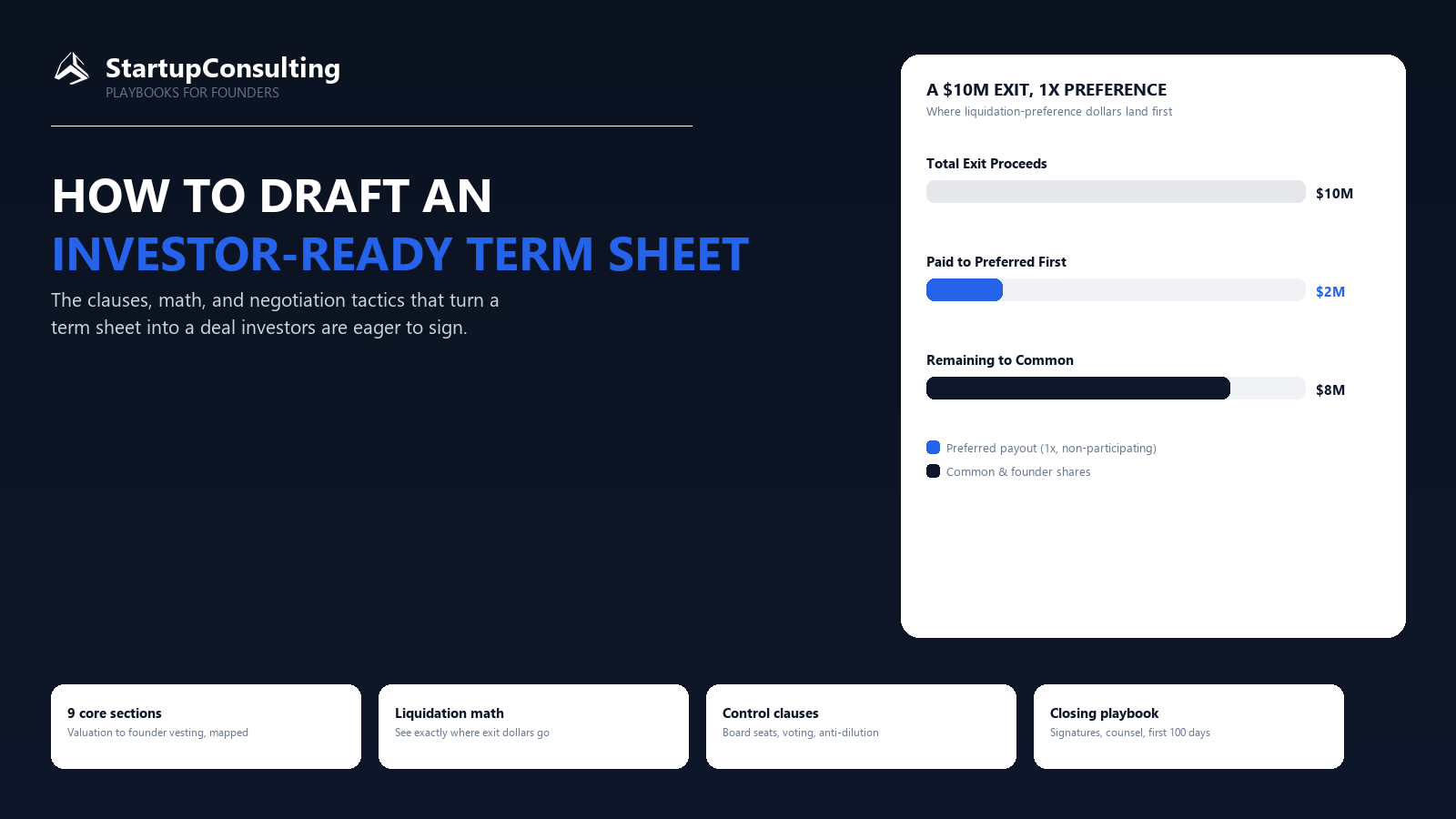
Launching your first funding round can feel like staging a Broadway debut in a broom closet: cramped, chaotic, and critical. Before the spotlight hits, investors will ask to see your term sheet, a document that turns handshake hopes into enforceable promises. If you botch that script, the curtain drops before opening night.
With wisdom gleaned from years of advising founders at Startup Consulting, this guide shows you how to craft a term sheet that investors sign with a grin. Unlike a convertible note or a SAFE, which can defer hard valuation conversations by using a valuation cap and discount instead of a fixed price, a priced-equity term sheet locks in valuation, liquidation preference, and control terms right away, so the details matter even more. We dissect critical clauses, decode jargon, and add tips to keep negotiations cordial when numbers get crunchy. By the end, you'll own a blueprint sturdy enough for due diligence. Pair it with our guide to preparing your startup’s books for a fundraise or exit, since term sheets move fastest when the financials behind them are already clean.
Because a lead investor’s confidence often hinges on what turns up once diligence begins, founders who have already tackled startup legal readiness for VC due diligence walk into term sheet negotiations with real leverage instead of surprises.
Understand the Anatomy of a Term Sheet
The Purpose Behind the Paper
A term sheet is a relationship roadmap. It sets the destination, speed limits, and roadside rest stops for both founders and financiers. Without it, you and your future board members may drive the same car while reading different maps, arguing about whether the gas-station latte budget counts as burn rate. By clearly memorializing economic and control provisions early, you reduce the risk of whiplash when actual contracts follow.
Binding Versus Non-Binding Clauses
Most term sheets split into two camps: clauses that bind like industrial glue and clauses that merely signal intent. Confidentiality and exclusivity often fall in the glue category. Valuation and option-pool adjustments usually live in the intent bucket, giving both parties wiggle room before final documents. Highlight which promises are handcuffs and which are high fives so nobody accuses the other of sleight of hand during diligence.
Common Sections at a Glance
Even the simplest template covers valuation, investment amount, share class, board composition, voting rights, liquidation preference, pro-rata rights, option pool, information rights, and founder vesting. Memorize this list. Scribble it on a sticky note, tattoo it on your co-founder’s forearm, or set it as the lock screen of every company laptop. Wherever you keep it, make sure these elements appear in the first draft or prepare for a barrage of investor redlines later.
| Section | What It Covers | Why It Matters |
|---|---|---|
|
The Purpose Behind the Paper
Sets the roadmap
|
Explains the role of the term sheet as the early framework for the founder-investor relationship, including key economic terms and governance expectations before long-form documents are drafted. | It aligns both sides before legal drafting begins, reducing confusion, mismatched assumptions, and negotiation friction later in the process. |
|
Binding Versus Non-Binding Clauses
Know what sticks
|
Distinguishes which clauses are enforceable immediately, such as confidentiality and exclusivity, from those that mainly reflect intent, such as valuation and option pool mechanics. | This helps both parties understand which commitments are already real obligations and which terms remain subject to final deal documentation. |
|
Common Sections at a Glance
Core deal terms
|
Covers the standard building blocks of a startup term sheet, including valuation, investment amount, share class, board composition, voting rights, liquidation preference, option pool, information rights, and founder vesting. | Including these sections in the first draft signals professionalism, speeds investor review, and reduces the chances of major redlines later. |
Negotiating Key Economic Terms
Pre-Money Valuation Realities
Founders love high valuations like cats love sunbeams, but inflate things too early and later rounds become a contortion act. This holds whether you are negotiating a seed-stage term sheet or a full Series A term sheet, since early overreach on valuation tends to force a painful down round later. Use comparable deals, revenue multiples, or, if you are pre-revenue, the ever-mystical “traction narrative” to justify your number. State pre-money clearly and add a simple equation showing how new cash converts to post-money. When investors see arithmetic they can replicate on a napkin, trust climbs quickly.
Liquidation Preferences That Don’t Haunt Your Dreams
A one-times non-participating preference is the vanilla ice cream of venture deals: predictable and unlikely to upset anyone’s stomach. Participating or multi-times terms, on the other hand, can turn your cap table into a haunted house where founders exit empty-handed while preferred shareholders line dance to the bank. Spell out the exact multiple, participation rights, and any caps so future lawyers cannot claim the language was spooky at midnight.
Option Pool Shuffle
Investors often request that the employee option pool expand pre-money, effectively discounting their purchase price. Negotiating the pool post-money lifts your valuation without seeming greedy. Decide the size based on hiring plans, not finger-in-the-wind percentages. Then reference head-count projections to justify it. When your math shows clarity, investors stop seeing the pool as a black hole that endlessly consumes equity.
Locking Down Control and Protection Clauses
Board Seats and Observer Rights
Your board should function like a balanced breakfast: enough protein to grow, enough fiber to keep things moving, and no sugary chaos. Granting one seat to lead investors is common; giving away a majority is a recipe for founders to watch decisions from the kids’ table. The same governance discipline your operating agreement established when you first formed the company should carry through here, since board composition and voting rights are really an extension of that founding governance structure. Clarify observer rights too, because silent observers with Slack access can still stir the pot without accountability.
Voting Thresholds for Major Actions
Define “Major Actions”, such as selling the company, issuing new shares, and changing bylaws, then list the percentage of preferred and common votes needed. Anti-dilution provisions deserve the same precision, since a broad-based weighted-average formula behaves very differently in a down round than the full-ratchet version some term sheets still propose. If you leave this blank, expect a late-night call where a minority holder blocks your Series B because the wording was fuzzy and they really want a new espresso machine installed before approving anything. Precision here prevents espresso extortion later.
Founder Vesting and Clawbacks
No investor wants to bankroll a scenario where a co-founder leaves six months in with a suitcase full of fully vested shares. Four-year vesting with a one-year cliff remains the industry-standard vesting schedule, but adjust based on team tenure. Include reverse vesting or clawback clauses tied to bad-leaver events. It sounds harsh until you picture someone quitting to start a competing unicorn using equity they did not truly earn. Unclear vesting terms are also one of the fastest ways to trigger founder disputes down the road, so spelling out the schedule and clawback triggers now saves painful conversations later.
Polishing the Draft to Impress Investors
Use Plain Language Over Legal Gobbledygook
A term sheet is not a medieval scroll. Avoid archaic phrases like “hereto” and “thereof” that make founders reach for a translator. Plain wording accelerates review cycles and shows respect for everyone’s calendar. If you must include legalese, tuck an explanatory sentence right after it so no one nods confusedly while secretly Googling terms in another tab.
Keep Formatting Clean and Friendly
White space is your friend, not wasted real estate. Use consistent fonts, logical headings, and short paragraphs. Numbered sections allow quick reference during tense Zoom calls. Track changes in a version-controlled document rather than renaming files “final_v8_really_final”. Clean formatting signals that you run a tight ship and, more important, that hidden clauses are not lurking between punctuation marks.
Time Your Delivery Like a Comedian
Send the term sheet when interest peaks, not after it flatlines. Ideally follow a strong pitch meeting within forty-eight hours while excitement still sizzles. Attach a polite deadline, nothing draconian, to prevent endless committee reviews. Include a cheerful cover note thanking the investor for their time and highlighting three standout terms. The right timing and tone convert curiosity into signatures faster than any clever clause ever written.
Preparing for Closing and Beyond
Signature Mechanics Without the Mayhem
When signatures begin, every minute feels like a scene from a heist movie: documents flying, timestamps ticking, and someone inevitably asking for the Wi-Fi password. Circulate a final PDF with clearly labeled signature blocks, indicate whether initials or full autographs are required, and use an e-signature platform everyone trusts. Double-check entity names, share counts, and wire instructions before anyone clicks “accept” so the closing does not unravel over a typo.
Align Counsel Before the Sprint
Founder counsel and investor counsel often play tug-of-war with commas. Host a brief call where both sides confirm open issues, redline etiquette, and timing. When lawyers feel heard, they spend fewer billable hours acting like medieval scribes debating parchment margins. The money saved can fund an extra engineer or at least better office coffee, which indirectly increases productivity and founder happiness. If you are still relying on generic templates by the time term sheet numbers are real, that is usually the clearest sign it is time to bring in a startup attorney instead of leaning on legal templates to review and negotiate the document itself.
Communicate Post-Signing Expectations
The ink may be dry, but relationships are still wet paint. Send investors a concise post-signing plan outlining board-meeting cadence, reporting packages, and key milestones for the next hundred days. This transparency prevents buyers’ remorse and proves that the professionalism shown in the term sheet was no fluke. Bonus points if you include a celebratory GIF that captures the team’s excitement without violating any trademarks.
Conclusion
A great term sheet blends clarity, fairness, and a dash of personality. Draft with precision, negotiate with humility, and polish with professionalism. When both sides feel respected and informed, signatures follow quickly, leaving you with a partnership built to last long after the celebratory coffee wears off.
Put this into practice with AI
This article is for general information only and is not legal, tax, accounting, HR, or investment advice. Consult a qualified professional for your specific situation.
Related reading
 Legal
LegalWhen to Hire a Startup Attorney vs. Use Online Legal Templates
Decide when to hire a startup attorney vs use legal templates, balancing cost, risk, speed, and growth without risking investors, equity, or IP.
Read article Legal
LegalHow to Ensure Your Startup Is Legally Ready for VC Due Diligence
A practical, witty checklist to get your startup legally ready for VC due diligence, from cap tables and IP to compliance and data rooms investors trust.
Read article Legal
LegalAvoiding Founder Disputes: Legal Best Practices for Early Teams
Learn legal best practices to prevent founder disputes, align roles, equity, and decisions, protect IP, and keep early teams focused and drama free.
Read article