
The Complete HR Compliance Checklist for New Companies
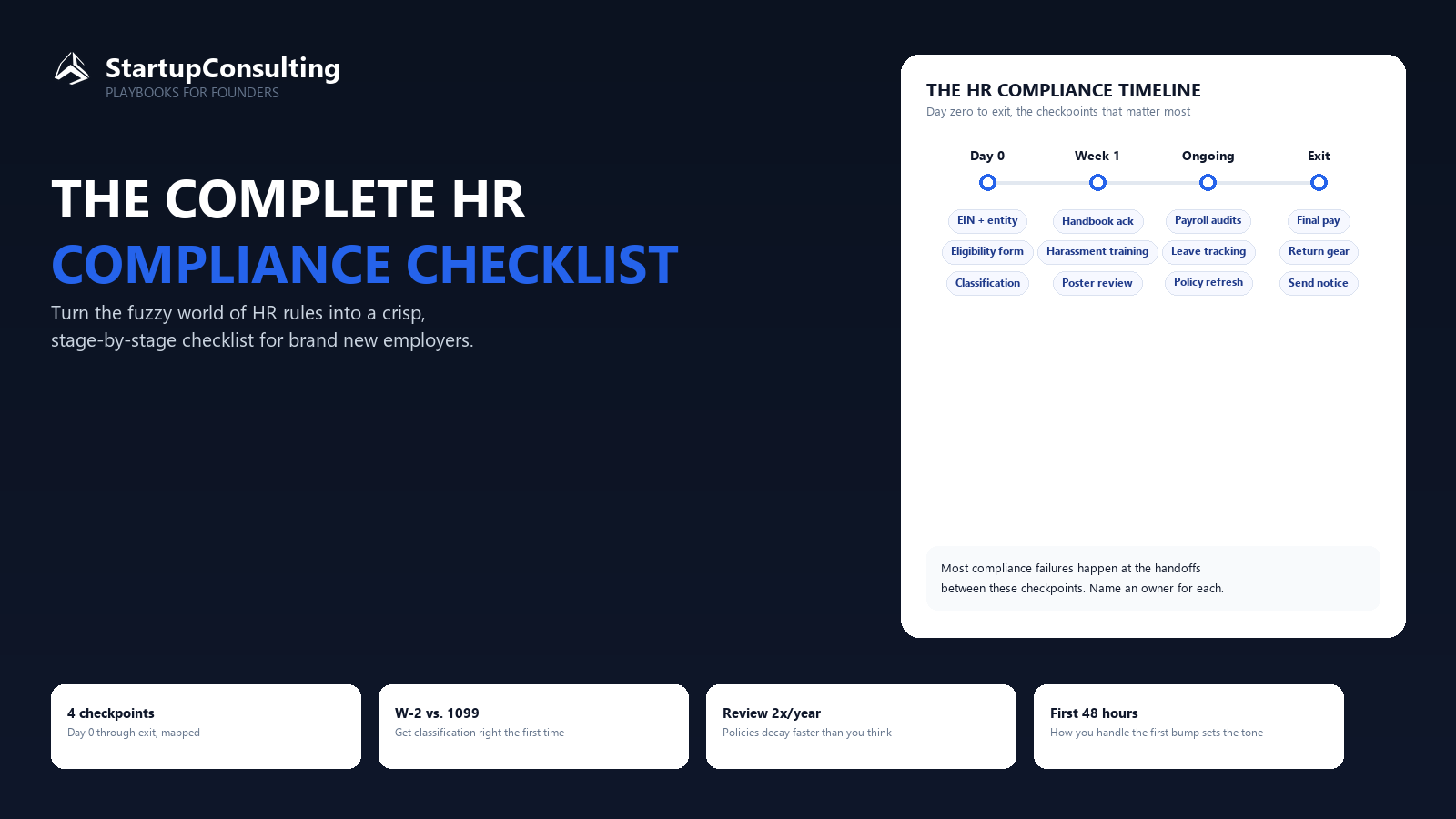
You have a product people will love, a domain name that was somehow not taken, and coffee that could power a small city. Now you need a hiring game plan that will not turn your dream into a regulatory headache. This guide turns the fuzzy world of HR compliance rules into a crisp HR compliance checklist for brand new employers.
Whether you are a solo founder about to add person number two, or a small team leveling up, you will learn the essentials that keep payroll humming and lawyers bored. It sits alongside startup consulting. Today.
What HR Compliance Actually Means
HR compliance is a promise you make to your future self. It is the choice to build people processes that meet laws you know and surprises you do not. Think of it as good hygiene for your business. Brush twice daily, see a professional when needed, and do not wait until something hurts.
The Legal Baseline
Every company lives under layers of rules. Federal laws set floors for wages, hours, safety, and equal opportunity. States often raise the bar with stricter wage statements, leave rights, and privacy protections. Cities add their own twists. Your job is to find the strictest rule that applies and follow that one.
The Practical Baseline
Compliance is more than statutes and codes. It is also the workflows that make obeying the law simple. Use clear roles, standard forms, and a single source of truth for records. Write policies in everyday language so managers can apply them without decoding.
Before You Hire Your First Employee
New company compliance starts long before an offer letter. Choose an entity, register properly, and define roles so people know where they stand. This prework reduces confusion, which is the secret source of many disputes.
Choose Your Entity and Employer IDs
Form the right entity for taxes and liability in your state. Get an Employer Identification Number (EIN) from the Internal Revenue Service (IRS) and, where required, a state employer account. Some states also require unemployment and disability insurance registrations. Keep confirmations in your company records.
Classify Roles Correctly
Decide who is an employee versus a contractor using control and independence tests. For employees, decide who is exempt from overtime using salary and duty standards that vary by jurisdiction. When in doubt, assume nonexempt and track hours.
Building Your Core Policies
Clear HR policies are the map new hires use to navigate your culture. They also prove that your expectations were clear. Draft them early, keep them short, and review them at least twice a year.
Handbook Essentials
Open with company values and code of conduct. Add anti harassment, equal employment, and accommodations policies with simple reporting paths. Include attendance, overtime approval, timekeeping, and conflict of interest sections. Ask employees to acknowledge the handbook in writing.
Time, Pay, and Leave
Spell out work hours, meal and rest breaks, timekeeping rules, and approval for remote work. Describe pay schedules, wage deductions that are allowed, and how to report errors. List the leaves you offer and any that the law requires.
| Policy area | What to include | Why it matters | How to keep it usable |
|---|---|---|---|
| Handbook essentials | Values + code of conduct, anti-harassment, equal employment, accommodations, and a simple reporting path. Add attendance, overtime approval, timekeeping, and conflict of interest sections. | Sets expectations early, reduces “I didn’t know” confusion, and shows you established clear standards. | Use everyday language and require written acknowledgments. |
| Time, pay, and leave | Work hours, meal/rest breaks, timekeeping rules, remote work approval. Pay schedules, allowed wage deductions, and how to report payroll errors. Leave offerings and legally required leaves. | Keeps payroll humming, helps managers apply rules consistently, and lowers risk from missed breaks or pay issues. | Make workflows explicit (who approves what, and where records live). |
| Operational baseline | Clear roles and responsibilities, standard forms, and a single source of truth for records. Include where to store documents and who can access what. | Compliance becomes repeatable instead of heroic—less room for mistakes as you grow. | Keep it short; link out to forms/templates instead of burying details in paragraphs. |
| Review cadence | A schedule to revisit policies at least twice per year, plus a lightweight process for tracking changes and re-collecting acknowledgments when needed. | Laws and practices change; regular reviews prevent quiet drift into noncompliance. | Assign an owner and put review dates on the calendar. |
Recruiting with Guardrails
Compliant recruiting respects people and the law at the same time. Design a process that treats each applicant consistently. Standardize where it helps, and keep room for human judgment where it matters most.
Fair Job Ads and Applications
Write postings that focus on skills, outcomes, and must have qualifications. If pay transparency laws apply, post ranges and the factors that affect offers. Use lawful application questions. Skip banned topics like prior pay history where prohibited.
Structured Interviews and Offers
Train interviewers to ask job related questions and to take notes that tie back to the role. Use scorecards to compare candidates on the same criteria. When it is time to offer, send a clear letter that covers pay, status, schedule, and contingencies.
Onboarding Without the Chaos
New hire onboarding is where compliance meets first impressions. New hires decide whether you are organized within the first week. Show them you are.
Paperwork and Records
Collect eligibility forms on day one, and complete employer sections on time. Create a secure folder for each employee that holds offers, tax forms, emergency contacts, acknowledgments, and required notices. Store medical or accommodation records separately.
Training That Sticks
Deliver harassment prevention training wherever required, and consider it everywhere. Add safety basics that match your workplace risks. Teach managers how to approve time, request leave, and escalate issues. Keep digital receipts that prove training happened.
Pay and Benefits That Stay Compliant
People join for the mission and stay for the package. Pay them accurately, explain benefits clearly, and fix mistakes quickly.
Payroll Mechanics
Pick a payroll system that handles tax withholdings, filings, and local quirks. Set pay periods and cutoffs that give your team enough time to approve hours. Audit pay stubs for required details. When errors happen, correct them in the next cycle and document what you did.
Payroll discipline is not just for the team roster — it applies to founders too. If you are an owner drawing pay from the same company, our guide on whether to pay yourself a salary or take dividends covers the payroll tax and reasonable-compensation rules the IRS expects active founders to follow.
Benefits and Notices
Offer benefits that fit your stage and comply with notice rules. Some benefits trigger federal notices, while others trigger state ones. Give plan documents on time, confirm enrollments, and track eligibility. Post required workplace posters where people will see them.
Everyday Compliance Habits
Compliance thrives on small, repeatable habits. Encourage managers to write quick notes after important conversations. Use short forms for common events, like schedule changes or coaching talks.
Manager Playbooks
Give managers a simple playbook that explains hiring steps, how to request a new role, and how to approve overtime. Include a short decision tree for time off, performance issues, and complaints.
Keep Records Alive
Set monthly routines to update job descriptions, pay rates, and emergency contacts. Archive documents when roles change and lock down access so private details stay private. Use retention schedules that match legal requirements.
When Things Go Sideways
Even healthy teams hit bumps. What you do in the first 48 hours sets the tone. Be calm, be curious, and write everything down.
Investigations and Documentation
Take every complaint seriously, whether it arrives in a formal email or a quick chat. Assign a neutral investigator. Collect timelines, documents, and witness notes. Keep findings separate from personnel files and share results on a need to know basis.
Exits That Do Not Backfire
When it is time to part ways, keep the process steady. Confirm final pay timing and any unused paid time off rules. Retrieve company property and cut system access the same day. Provide required notices at separation.
Your Midpoint Reality Check
By now you might feel like you are keeping plates spinning on a windy day. That is normal. Take a breath and complete a quick audit. Check classifications, handbook acknowledgments, training logs, and pay stub details. Review recruiting templates for fairness and clarity.
Ask managers where the process still feels clunky. This is often the same moment founders decide whether the next step is a full-time HR hire or continued fractional support, or whether outsourcing HR entirely covers the gap more cheaply. This is also a smart time to align your people goals with your marketing plan so hiring, budgets, and growth targets point in the same direction.
Making It Real in the Next 30 Days
Pick three improvements and commit to them. Maybe it is rewriting your timekeeping policy, retraining interviewers, or switching payroll providers. Schedule the work, assign owners, and put the due dates where you will see them. Celebrate small wins so the team knows this matters.
Conclusion
HR compliance for startups is not an obstacle course. It is a set of rails that keep your company moving in the right direction. Start with the basics, build habits, and refresh as you grow. When laws change, you will be ready because your system is built for change. Your future self will thank you, and your team will too.
Put this into practice with AI
This article is for general information only and is not legal, tax, accounting, HR, or investment advice. Consult a qualified professional for your specific situation.
Related reading
 HR
HROutsourcing HR for Startups: What It Costs and When It Makes Sense
Learn when HR outsourcing makes sense for startups, what it costs, and how the right partner streamlines hiring, compliance, and daily operations.
Read article HR
HRBuilding Your First HR Department: A Step-by-Step Guide for Startups
A practical, founder-friendly guide to building your first HR department, clear steps, smart systems, and culture that scales with your startup.
Read article HR
HREmployee Equity vs. Cash Compensation: What Founders Need to Know
Learn how founders can balance equity and cash compensation to attract talent, manage runway, and build a fair, sustainable startup culture.
Read article