
Outsourcing HR for Startups: What It Costs and When It Makes Sense
Launching a company feels like juggling lava lamps while filing taxes. You recruit, you ship, you sell, and somewhere between the second hire and the first demo, HR chores start breeding. The question is not whether they matter, it is how to handle them without losing momentum. Outsourcing tempts because it adds structure, speed, and fewer late-night scrambles, yet the acronyms and pricing pages can read like puzzles.
Founders want to know what HR outsourcing costs, when it pays off, and how to keep culture human while the paperwork stays tidy. This guide gives crisp answers you can use this quarter, drawing on the same tradeoffs you see in startup consulting. If you want predictable hiring, clean payroll, and fewer compliance surprises, the right partner can help. HR should be a supportive backbone, not a bossy traffic cop.
Why HR Gets Outsourced Early
The Hidden Work Inside HR
HR looks tiny on paper, yet it is a hydra in practice. Recruiting coordination, offer letters, background checks, I 9s, benefits selection, time off tracking, manager guidance, and policy updates pile up quickly. Every process touches sensitive data and ticking deadlines, which creates risk and stress that never quite sleeps.
The Risk of Going It Alone
Running HR with ad hoc tools is like flying with one wing. Misclassified contractors trigger fines. Late ACA notices invite penalties. Unclear policies create disputes that stall growth. Even small errors can snowball, especially when hiring accelerates or you expand into new states. Outsourced HR compresses this risk by giving you repeatable processes and steady expertise.
What It Actually Costs
Common Pricing Models
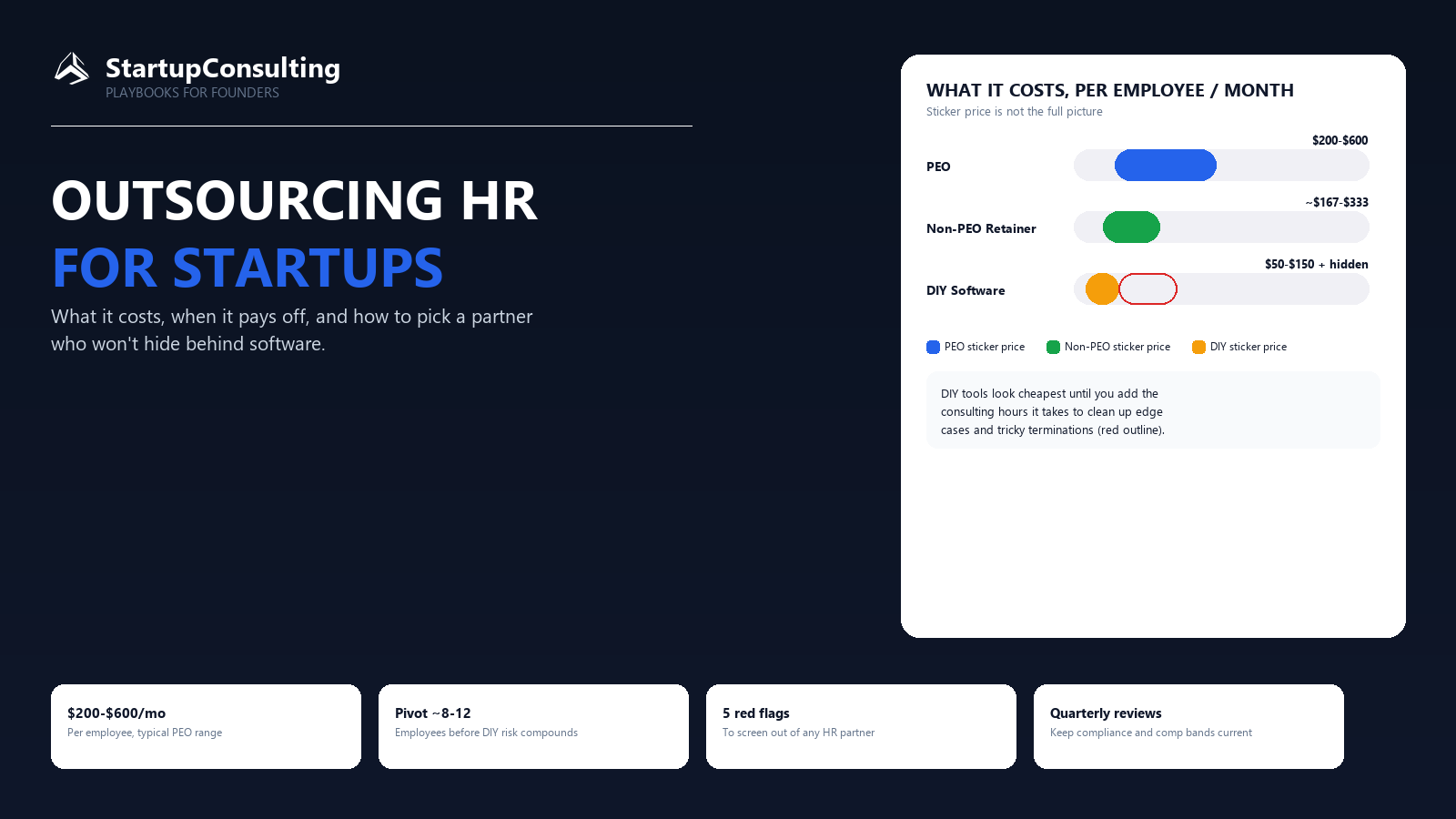
Most HR outsourcing companies price on either a per employee per month basis or a percentage of payroll. PEOs bundle payroll, benefits, and compliance under a co employment model, which often includes access to big company benefits at lower rates. HR outsourcing firms that are not PEOs usually charge a flat monthly retainer scaled to headcount tiers. Add ons include recruiting projects, custom handbook work, and multistate registrations.
Sample Monthly Scenarios
A six person team might pay between two hundred and six hundred dollars per employee per month with a PEO, depending on benefits and state mix. A twelve person team using a non PEO HR firm might see a two to four thousand dollar monthly retainer. Early payroll and benefits software will look cheaper, although the savings fade once you add consulting hours to clean up edge cases or support a tricky termination.
The Pivot Point: When Outsourcing Makes Sense
There is a moment when HR stops being a task list and becomes a force multiplier. You feel it when managers need coaching, when onboarding backlogs slow releases, and when compliance questions interrupt investor meetings.
This is also when a reputable partner can shorten time to hire, tighten documentation, and give you a steady operating rhythm. It is often the same point where founders weigh full-time HR against fractional support before committing to a specific outsourcing model. A single quarterly misstep can cost more than a year of thoughtful outsourcing, which is why founders treat HR like core infrastructure rather than an afterthought.
How to Choose the Right Partner
Questions to Ask
When vetting an HR outsourcing company, ask who will actually serve your account, how many clients they each support, and what response times look like during hiring surges. Request a plain language map of their services, including what is included, what is extra, and how they escalate urgent issues.
Confirm data security practices, document retention, and how they handle audits. Ask to see sample workflows for onboarding, leave requests, and investigations, since those are the moments that test a partner.
Red Flags and Green Lights
Beware vendors who talk only about software while dodging messy people topics such as performance issues or terminations. Be cautious with proposals that bury fees in benefit markups or that push long contracts with stiff exit clauses. Favor partners who present clean scopes, sensible month to month terms after an initial period, and accountable metrics.
Healthy partners welcome clear service levels, make intros to their practitioners, and explain how they hand back work if you insource later.
| Evaluation Area | Questions to Ask | Green Lights | Red Flags | What to Get in Writing |
|---|---|---|---|---|
| Service Team & Support |
|
|
|
SLAs (response + resolution targets), escalation path, and dedicated roles (HRBP, payroll, benefits, compliance). |
| Scope & Pricing Clarity |
|
|
|
Fee schedule, renewal terms, exit terms, and a list of billable events (special projects, audits, investigations). |
| Workflows That Matter |
|
|
|
Documented workflows, RACI/ownership, and escalation rules for sensitive cases. |
| Compliance & Risk Coverage |
|
|
|
Compliance responsibilities, audit support scope, and documentation/retention policy. |
| Security & Data Handling |
|
|
|
Security addendum (DPA), breach notification timeline, and access controls policy. |
Implementation Without the Drama
Prep Work
Treat an HR outsourcing kickoff like a product launch, not a Venture quest. Clean your employee data, decide your single source of truth for job titles and compensation, and pick one place for policies to live. Choose a one page approval path for offers, promotions, and terminations, then stick to it. Align managers on expectations before the first onboarding date, so the new hire learns how decisions really get made.
After the Switch
Expect the first month to feel busy, then calmer. Your new partner should run payroll cleanly, migrate benefits, and set up ticketing for HR requests. Encourage managers to funnel questions through the partner so your internal Slack does not become a rumor factory. Schedule a monthly business review that covers open roles, employee relations themes, turnover, and benefit usage. The goal is not paperwork, it is predictable operations that free up your attention.
Advanced Cost Levers to Consider
Benefits Strategy
Rich medical plans sound generous, yet they can drain cash if chosen without data. Ask for utilization reports and age demographics, then pick plans that match reality rather than ego. Consider whether a health reimbursement arrangement makes sense for your size. Carriers reward cleaner data and complete enrollments, which is another reason a tidy outsourcing relationship pays for itself.
Multistate and Global Hiring
Once you hire across state lines, multistate HR compliance registrations, notices, and local rules stack up. Outsourcing shines here because experienced teams already know how to set up withholding accounts, manage paid leave variations, and track local postings. If global hiring is on the horizon, decide whether you need an employer of record or a legal entity. The right partner will explain the tradeoffs in cost, control, and speed without drama.
Culture, Compliance, and the Reality Check
Protecting Culture While You Scale
Outsourcing should never feel like a wall between leaders and employees. Ask your partner to coach managers on feedback, leveling, and promotions, and to provide templates that sound like your company. Clarity builds trust. Consistent expectations reduce surprises. A good partner helps you design rituals, from onboarding coffee chats to straightforward performance reviews, that keep the team human.
The Compliance Baseline You Cannot Skip
No one wakes up excited about I 9 audits or wage notices, yet these are table stakes. Confirm your partner maintains current posters, wage statements, and required trainings. Ensure you have documented job descriptions, clear exempt status determinations, and pay bands you can defend. Set a calendar for policy reviews each quarter. Keep a crisp incident log so that, if a tough situation arises, your notes read like a timeline rather than a novel.
What to Expect by Stage
Pre Seed and Seed
Founders at this stage usually need light recruiting coordination, compliant onboarding, and a reliable payroll engine. A lean outsourcing setup handles the basics and provides a point of contact for employees who have benefits or leave questions. The focus is speed without sloppiness.
Series A and Beyond
As headcount rises, people topics become business topics. Leaders need help with performance systems, leveling frameworks, and manager training. Compliance expands to multistate rules and deeper documentation. An experienced partner provides patterns that scale, from salary bands to leave processes, which keeps your internal team calm during growth spurts.
Conclusion
Outsourcing HR for startups is not an admission of weakness, it is a decision to buy time, reduce risk, and install repeatable operations. Price it by your stage, not your aspirations. Choose partners who answer clearly and act quickly.
Then keep a steady drumbeat of reviews, so your HR engine supports growth without stealing the spotlight. When done right, you will feel the difference where it counts, fewer distractions, smoother hiring, cleaner compliance, and more energy for the work only you can do.
Put this into practice with AI
This article is for general information only and is not legal, tax, accounting, HR, or investment advice. Consult a qualified professional for your specific situation.
Related reading
 HR
HRThe Complete HR Compliance Checklist for New Companies
A complete HR compliance checklist for startups, covering hiring, payroll, policies, and legal essentials to keep your new company compliant.
Read article HR
HRBuilding Your First HR Department: A Step-by-Step Guide for Startups
A practical, founder-friendly guide to building your first HR department, clear steps, smart systems, and culture that scales with your startup.
Read article HR
HREmployee Equity vs. Cash Compensation: What Founders Need to Know
Learn how founders can balance equity and cash compensation to attract talent, manage runway, and build a fair, sustainable startup culture.
Read article