
Do You Need an Operating Agreement? Why Most Startups Overlook This
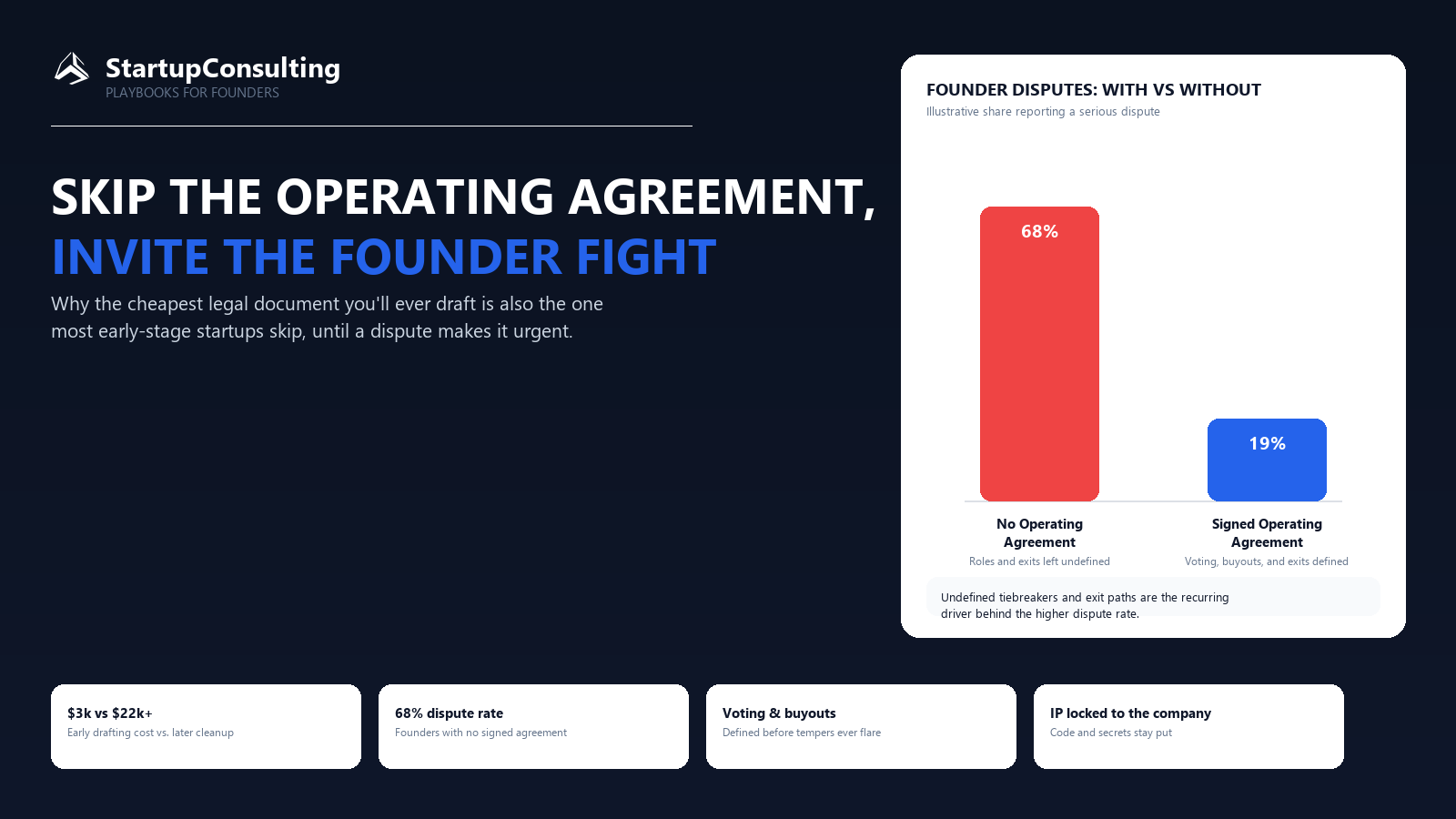
Founders love to sprint. The adrenaline of shipping code at midnight, pitching before breakfast, and chasing the next metric keeps everyone wired. In that rush, dusty legal paperwork feels like kryptonite, so the humble operating agreement often ends up buried at the bottom of the to-do list. Yet this single document decides who actually owns the sprint, what happens when somebody stumbles, and how the ultimate payout gets sliced.
Remember, investors love rocket-ship graphs, but what they truly respect is a cap table and governance framework that will not combust once it leaves the atmosphere. So grab a mug of coffee, silence Slack for five minutes, and give the next pages a read as we unpack why most early-stage companies skip it, and why you probably should not. We will keep the jargon light, add a dash of playful honesty, and slip in Startup Consulting just once to satisfy the SEO gods while staying reader-friendly.
Understanding Operating Agreements
Definition and Purpose
An operating agreement is the constitutional charter of your limited liability company. It spells out ownership percentages, voting thresholds, profit distributions, and the awkward breakup procedures nobody wants to discuss on launch day. Without it, your state’s default rules jump in like a random roommate who rearranges the fridge at two in the morning. Those statutes were written for generic corner stores, not for a caffeine-fueled software crew. Writing your own rules lets founders decide how their unique venture should actually run.
Key Components Inside
Most agreements share familiar building blocks. Expect articles on capital contributions, member duties, admission of newbies, and paths to dissolve the company if everything goes sideways. Savvier teams also add intellectual property assignments and confidentiality promises so code and secrets stay inside the house. The magic lies less in fancy Latin and more in forcing brutally honest conversations early, while everyone still likes each other. That up-front clarity keeps surprises from detonating months later.
The Legal Backbone of an LLC
Courts, banks, and investors treat an operating agreement as proof that your LLC is more than a logo. It shows owners observe basic formalities, which preserves limited liability if disaster strikes. Try opening a multi-signature bank account without one and watch the teller’s eyebrows climb. Lenders may balk, and regulators can pierce the veil more easily when internal rules are foggy. This paperwork is the spine that keeps your legal posture upright.
Common Misconceptions That Lead Founders Astray
We're Friends, We Don't Need Paperwork
Many founding squads bond over late-night ramen, so signing contracts feels stuffy and corporate. Friendship, however, does not survive every pivot. Once equity becomes valuable, memories grow suspiciously selective. The agreement is a time capsule written while spirits are high, capturing promises before they fade. Think of it as a prenup for your business marriage, drafted while everyone is still sending heart emojis.
The Myth of the Default State Statute
Some entrepreneurs assume the law will fill any gap. It will, but probably not in ways they enjoy. Default rules might grant each member equal voting power or force profits to follow capital ratios even if one founder contributed only pizza. Those defaults cannot grasp bespoke deals like vesting cliffs or profit waterfalls. Relying on them is like letting a stranger order for you at a restaurant, and you may end up allergic.
Speed Over Structure Mindset
The move-fast ethos convinces teams that legal documents drag momentum. In reality, not having rules speeds them directly into conflict. Negotiating governance after money hits the bank is like rewiring a plane mid-flight. The short time spent crafting an agreement is cheap insurance against litigation that can freeze progress for months.
Risks of Skipping an Operating Agreement
Disputes and Deadlocks
Two co-founders each holding fifty percent and no tiebreaker rule can paralyze progress. When opinions clash, the company stalls, vendors go unpaid, and talent walks. Courts may appoint a receiver who charges hourly fees while dismantling your dream. An agreement can grant casting votes, mediation triggers, or buyout paths that keep operations humming when tempers flare. These are exactly the scenarios where avoiding founder disputes starts on paper rather than in a courtroom, since a mediation clause or buyout formula only has teeth if it was signed before tempers flared.
Fuzzy Equity and Dilution Drama
Without clear contribution records, founders forget who pledged what. One partner may feel taken advantage of, claiming extra shares for effort that was never documented. Investors hesitate to join a cap table clouded by informal verbal promises. Cleaning that up demands audits and buybacks that burn cash better spent on growth. These cleanup costs rarely appear in budgets, yet they can rival an entire seed round, forcing teams to lay off staff or surrender equity at bargain valuations just to cover legal invoices. All that pain is avoidable with a pen and an hour today.
Banking, Investors, and Other Gatekeepers
Many banks demand an operating agreement before opening an account if multiple signatories exist. Accelerators and angel groups put it on their diligence checklist. A missing document signals disorganization, prompting them to pass or delay funding while your rivals speed ahead. Failing to please these gatekeepers can starve a startup of capital at the worst possible moment.
Crafting an Agreement That Actually Works
Clear Roles, Realistic Expectations
A strong agreement names managers, defines what they can do solo, and lists actions requiring member approval. It sets meeting schedules, record-keeping duties, and fiduciary obligations in language that humans can read without caffeine goggles. By mapping authority clearly, founders dodge the classic “I thought you were handling that” blame game. This distinction matters beyond internal harmony, too: once a manager or member also draws a paycheck as a working founder, those role definitions need to line up with employment law basics for startups, since a title on paper does not automatically settle worker classification, overtime eligibility, or payroll obligations.
Voting Rules and Exit Paths
Not every decision warrants full democracy. The document can assign routine spending to managers, reserve extraordinary moves such as mergers, dissolutions, or massive debt for supermajority votes, and detail how a member can exit gracefully. Drag-along and tag-along clauses protect both majority and minority owners, while buy-sell formulas prevent hostage situations where a departing founder demands an absurd price.
Intellectual Property and Confidentiality
Startups trade on ideas, so the agreement should confirm that all code, brand assets, and trade secrets belong to the company, not the individual coder. Confidentiality clauses deter loose lips at conferences and coffee shops. They also reassure future acquirers that the intellectual property they are buying is clean, avoiding nasty surprises during due diligence.
| Section | What It Should Cover | Why It Matters |
|---|---|---|
|
Clear Roles, Realistic Expectations
Authority without confusion
|
Define who manages day-to-day operations, what decisions can be made independently, which actions require member approval, and what record-keeping or fiduciary duties each person carries. | Clear role definitions reduce internal confusion, prevent duplicated effort, and help the company avoid the classic startup problem of everyone assuming someone else is responsible. |
|
Voting Rules and Exit Paths
Decisions and departures
|
Spell out ordinary versus major decisions, required voting thresholds, buy-sell terms, member exits, and any drag-along, tag-along, or transfer rules that affect ownership changes. | This keeps disagreements from turning into deadlocks and gives the company a workable path forward if someone leaves, wants out, or blocks a major transaction. |
|
Intellectual Property and Confidentiality
Protect the company’s assets
|
Confirm that code, product assets, branding, inventions, and trade secrets belong to the company, and include confidentiality obligations that limit unauthorized sharing or misuse. | Investors, acquirers, and future counsel want confidence that the startup actually owns what it is building. Clean IP and confidentiality language reduce diligence problems later. |
How to Draft Without Draining the Budget
Lean Lawyering
Fancy downtown firms can draft an agreement in exchange for a kidney, yet many attorneys offer startup packages at fair rates. Some will even defer fees until a funding round closes. The key is hiring counsel who understands early-stage chaos and can translate issues into plain speech instead of burying founders under Latin phrases. That alone can shave weeks off your timeline and preserve morale.
Template Pitfalls to Dodge
Free templates lurk online like abandoned shopping carts. They can work in a pinch but often carry assumptions from other jurisdictions, outdated statutes, or missing exhibits. Copying them wholesale may create conflicting clauses that later explode. If a template is the only option, at least have a lawyer skim it or consult state guidelines to patch the biggest holes.
Iteration as Your Startup Evolves
The first version of your agreement is a snapshot, not a tattoo. As the team grows and investors arrive, revisit the terms. Bake amendment procedures into the document so changes need only a defined vote rather than unanimous consent. An evolving contract mirrors an evolving business, keeping risk contained as complexity rises.
Signs It's Time to Revisit the Document
New Money, New Clauses
The moment external capital appears, investors will push for protective provisions like preferred returns or board seats. Updating the agreement in anticipation shows professionalism and speeds negotiations. Waiting until term-sheet signing day invites frantic midnight edits that inflate legal bills.
Team Changes and Buyouts
When a key founder departs, equity and decision-making weight shift. If the agreement is silent on buyouts or vesting forfeitures, the exit can devolve into courtroom drama. A periodic review ensures the rules match the current roster, not the ghosts of founders past. Quite literally overnight.
Regulatory Shifts and Industry Growth
Compliance landscapes can change overnight, especially in sectors like fintech or health tech. Adjusting indemnification clauses, data-protection language, or capital requirements keeps the company aligned with the law and attractive to partners who demand robust governance.
The One Page Myth: Can Simplicity Work?
Minimalism vs. Completeness
A single page stuffed with buzzwords feels efficient, but it usually glosses over deal breakers like vesting schedules and deadlock remedies. When those details are missing, the agreement becomes a glorified napkin rather than a serious document. Courts look for precise language, and investors want numbers, not vibes. While brevity can be beautiful, it should never leave core issues to chance.
Hidden Complexity in Tiny Docs
The paradox of legal minimalism is that every stray sentence matters more. If you squeeze voting rights into one vague clause, litigators will spend weeks arguing about what those twelve words mean. Ambiguity breeds expense, and the money saved on drafting disappears in the first deposition. Extra paragraphs, though dull to write, save fortunes by leaving less room for interpretation.
Finding the Sweet Spot
The trick is not to write a novel; it is to cover essential subjects with enough specificity to avoid fights. Many solid agreements land around fifteen pages. They read quickly thanks to spacing and plain language. Founders can annotate drafts in everyday words, then let counsel convert those notes into enforceable clauses, achieving clarity without bloat.
When Lawyers Meet Investors: Bridging the Language Gap
Translating Legal Jargon for Pitch Day
Nothing drains energy from a pitch like a slide full of archaic legal jargon. Yet investors still ask pointed governance questions. Founders should rehearse explanations of their agreement in plain English, converting terms like “drag-along right” into quick anecdotes about keeping exits smooth. Doing so reassures backers that management grasps both the legal and business sides.
Aligning Term Sheets with Your Agreement
A term sheet is only a promise until the operating agreement absorbs its provisions. Protective covenants, liquidation preferences, and board structures must migrate from Google Docs into the official LLC bible. Ignoring one preference stack can unravel negotiations when attorneys compare documents. Version control discipline and a final audit before signatures keep everything aligned.
Post-Closing Governance Rituals
After funding, many founders ignore their agreement until the next crisis, treating it like a fire extinguisher gathering dust. Smart teams schedule periodic reviews, logging amendments and recording major votes in written consents. This simple ritual turns the document from a doorstop into a living guide that evolves alongside the product roadmap.
Practical Checklist Before You Hit Print
Conduct a Line-By-Line Founder Review
Before anyone signs, walk through the agreement line by line with every founder present. Confirm that ownership percentages equal what was promised verbally, that voting thresholds suit the real balance of power, and that contribution schedules reflect actual bank transfers. Track unresolved questions in a shared document, then send them to counsel for rapid-fire answers. This group read-through can feel tedious, yet it surfaces misunderstandings while the stakes are still low.
Sign, Date, and Store Like a Pro
Once the language is locked, sign in duplicate or triplicate, depending on how many parties and banks need originals. Include signature blocks for managers, members, and, if needed, spouse consents in community property states. Write the effective date clearly near the top so nobody argues later about when obligations started. After execution, distribute scanned copies in PDF format and store hard copies in a fire-safe box.
Keep a Digital Paper Trail
Digital life moves fast, and so should document management. Upload the agreement to a secure, access-controlled drive, then label each future amendment with the date and a brief description, such as “Series A update to voting rights”. Use the same folder for cap tables and board minutes so nothing gets lost. This tidy archive reduces panic during due diligence and makes the company look organized, which investors love. A well-drafted operating agreement is one of the first documents on any startup legal readiness for VC due diligence checklist, so keeping it current pays off long before a term sheet ever arrives.
Conclusion
An operating agreement is not just a formality; it is the rulebook that keeps your startup flying straight when turbulence hits. Draft it early, revisit it often, and treat it with the same respect you give your codebase or customer data. The hour you invest today can spare you months of expensive headaches tomorrow—and that is a trade any savvy founder should take.
Put this into practice with AI
This article is for general information only and is not legal, tax, accounting, HR, or investment advice. Consult a qualified professional for your specific situation.
Related reading
 Legal
LegalWhen to Hire a Startup Attorney vs. Use Online Legal Templates
Decide when to hire a startup attorney vs use legal templates, balancing cost, risk, speed, and growth without risking investors, equity, or IP.
Read article Legal
LegalHow to Ensure Your Startup Is Legally Ready for VC Due Diligence
A practical, witty checklist to get your startup legally ready for VC due diligence, from cap tables and IP to compliance and data rooms investors trust.
Read article Legal
LegalAvoiding Founder Disputes: Legal Best Practices for Early Teams
Learn legal best practices to prevent founder disputes, align roles, equity, and decisions, protect IP, and keep early teams focused and drama free.
Read article