
How to Ensure Your Startup Is Legally Ready for VC Due Diligence
Launching a venture often feels like assembling a jet engine while it is already roaring down the runway. Your slide deck dazzles, the product demo almost never crashes, and the team chat pulses with midnight emoji. Yet nothing chills investor enthusiasm faster than a sloppy legal trail. Before the venture capitalists crack open your virtual data room, you must prove that every contract, permit, and cap-table cell can survive forensic scrutiny.
This handbook delivers the essential checklist with a wink of humor and a jolt of Startup Consulting savvy so you can stride into due diligence with confidence, not caffeine-driven dread. Think of every section that follows as a preflight checklist: tick each box and your funding journey will feel like smooth cruising at altitude.
Build a Clean Cap Table
Track Every Share
Cap tables are living organisms that mutate each time you issue options or sign a convertible note. Founders must log every grant date, strike price, and vesting schedule before those details fade into memory haze. Investors will cross-reference your spreadsheet with board minutes, so discrepancies explode like popcorn in a sealed bag.
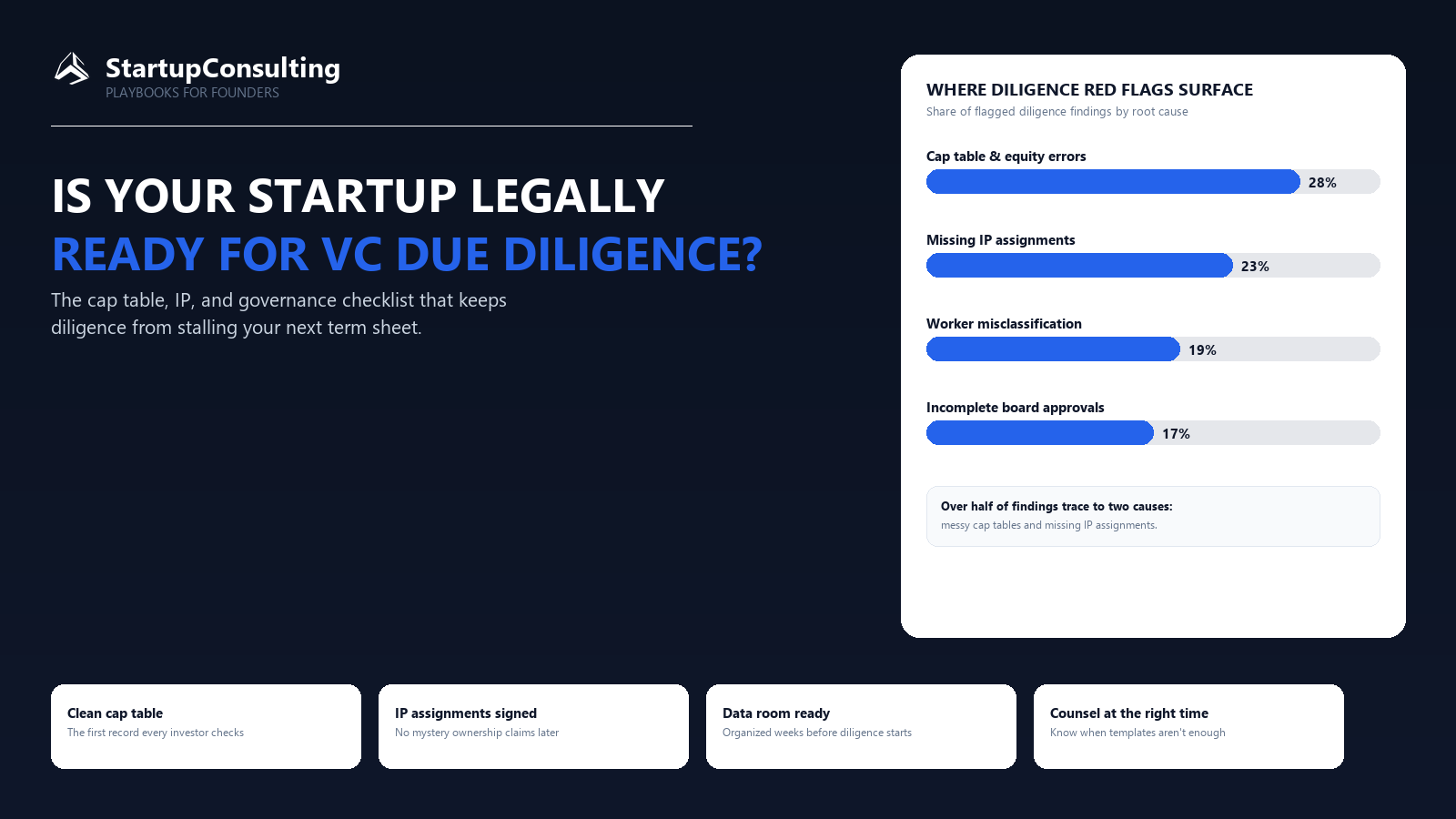
Use dedicated equity software rather than that colorful but error-prone tab twelve of the fundraising workbook. Audit the table quarterly and after each transaction, printing a PDF snapshot that cannot be quietly overwritten later. Clean records demonstrate discipline, helping analysts focus on growth metrics instead of amateur arithmetic mistakes. Cap table accuracy is not a nice-to-have here—it is the first data point every term sheet’s math depends on.
Because most venture-backed companies are incorporated as Delaware C-corps, a clean cap table carries a second benefit worth flagging early: keeping authorized share counts sensible also keeps your Delaware franchise tax bill predictable, and experienced diligence teams routinely confirm that the annual report and tax payment are both current before they sign off on corporate hygiene.
Document Board Approvals
Every issuance requires formal board consent recorded in minutes, not a thumbs-up emoji buried deep in chat history. Adopt a template that states quantity, class, and vesting so approvals survive future legal archaeology expeditions. Sign the minutes within days, then store them in chronological order inside a governance folder investors can navigate.
Missing signatures create ownership uncertainty that lawyers love to monetize at your expense during closing sprints. A tidy paper trail signals maturity beyond your company’s coffee-stained hoodies and keeps valuation discussions on track. Board discipline also impresses independent directors you hope to recruit after the seed round converts.
| Cap Table Area | What to Track | Why Investors Care | Best Practice |
|---|---|---|---|
| Share Issuances | Founder shares, investor shares, option grants, grant dates, and ownership percentages. | Investors need to confirm who owns the company and whether the ownership records match legal approvals. | Use dedicated equity software and update the cap table after every transaction. |
| Option Grants | Strike price, vesting schedule, grant size, expiration date, and board approval. | Incorrect option records can create dilution surprises and delay financing documents. | Record each grant immediately and keep signed option paperwork in the data room. |
| Convertible Notes and SAFEs | Principal amount, valuation cap, discount, maturity date, conversion terms, and investor name. | VCs need to model post-financing ownership and understand future dilution. | Maintain a separate schedule for all convertible instruments and reconcile it with the cap table. |
| Board Approvals | Formal consents, meeting minutes, voting records, and signed resolutions. | Missing approvals can create uncertainty around whether equity was validly issued. | Document every issuance with board consent and store approvals in chronological order. |
| Quarterly Audits | Ownership totals, fully diluted shares, vesting status, and transaction history. | Regular audits reduce the chance of errors appearing during investor review. | Create quarterly PDF snapshots so historical records cannot be quietly overwritten. |
Nail Corporate Governance
Keep Minutes Meticulous
Minutes are the company’s institutional memory and the first documents counsel inspects when rumors of chaos swirl. Record attendees, motions, vote counts, and resolutions while memories remain fresh and tempers warm from the meeting. Avoid editorial color commentary; stick to facts so future readers do not decode sarcasm as legal obligation.
Circulate drafts within forty-eight hours, accept minor edits, then seal the file like a time capsule for auditors. Store board and shareholder minutes separately to honor privacy expectations and regulatory frameworks. Meticulous minutes provide clarity, curb litigation risk, and spare founders from reconstructing events using emoji context clues. Treat this as core corporate housekeeping rather than an afterthought—it is exactly the kind of unglamorous discipline diligence teams check first.
Adopt Robust Bylaws
Generic incorporation bylaws rarely anticipate the creative chaos of venture-backed hypergrowth startups. Tailor provisions for electronic meetings, staggered board elections, and indemnification that matches modern risk profiles. Include advance-notice rules so activists cannot ambush shareholder meetings with surprise agendas.
Review bylaws annually with counsel to ensure they still fit after pivots realigned revenue streams and shareholder composition. Update filings promptly because stale bylaws signal operational drift to diligence teams sniffing for weakness. Robust bylaws act like structural beams, invisible but essential to preventing cracks during scaling tremors.
Master Intellectual Property
Secure Ownership Assignments
Investors assume the company owns every line of code and design pixel, not the weekend contractor who disappeared. Use invention-assignment agreements that cover past and future work, and sign them before contributors touch the repository. Retroactive signatures invite leverage requests when financing deadlines loom, turning short tasks into expensive ransom negotiations.
For open-source components, track licenses so counsel does not find copyleft surprises that scare acquirers away. Maintain a spreadsheet linking every contributor to a signed agreement stored in the data room for instant verification. Ownership certainty lets product teams innovate boldly without whispering legends of mysterious prior rights. Missing IP assignment agreements are one of the most common reasons diligence stalls, so chase down signatures the moment someone joins the repository, not the moment a term sheet appears.
Protect Confidential Information
Non-disclosure agreements should be calibrated scalpels, not medieval clubs that claim weather as proprietary data. Define secrets narrowly to avoid judicial eye rolls, and specify reasonable protection methods employees must follow. Label confidential documents clearly and restrict access through role-based permissions to show proactive stewardship.
Conduct brief training so interns do not screenshot dashboards for weekend bragging rights on social media. Revisit NDAs with each funding round because jurisdiction and statute changes can blunt once-sharp clauses. Guarding secrets zealously portrays your team as capable custodians of intangible value worth venture dollars.
Employment and Consultants
Classify Workers Correctly
Misclassifying employees as contractors is the corporate equivalent of storing fireworks next to the server rack. Regulators examine behavioral control, financial control, and relationship continuity before issuing penalty invoices. Shift borderline roles onto payroll early rather than arguing intent with an agency that holds penalty calculators.
Update offer letters when roles evolve so compliance keeps pace with job descriptions, not outdated onboarding packets. Keep timesheets for hourly staff because overtime disputes attract class-action lawyers like seagulls to beach fries. Sound classification protects budget, morale, and your reputation as a responsible steward of human capital.
Implement Compliant Agreements
Offer letters should state at-will employment, confidentiality duties, and arbitration terms in language humans understand. Consultant contracts must set deliverables, payment milestones, and IP transfer so they cannot claim authorship later. Avoid copying templates blindly; state law quirks can void clauses, turning agreements into decorative stationery. When the stakes are high enough that a mistake could jeopardize financing, that is exactly the moment to move from templates to counsel—our guide on knowing when to hire a startup attorney instead of relying on legal templates walks through that judgment call step by step.
Track agreement expiration dates to renew timely and avoid awkward gaps where duties persist but signatures lapse. Provide each worker with a signed copy, because absent paperwork breeds folklore about what the contract actually promised. Professional agreements reassure investors that people operations run on procedure rather than pinky swears.
Regulatory Compliance
Understand Industry Licenses
A fintech startup without money-transmitter licenses is just a group chat inviting cease-and-desist fan mail. Map every jurisdiction where you market or store user data, then research local approval requirements early. Filing fees look trivial compared with the cost of shutting off entire geographies during diligence fire drills.
Designate one founder as compliance champion so accountability stays crisp even when revenue dashboards flash red. Maintain a calendar of renewal dates because agencies rarely appreciate creative excuses for late paperwork. Proactive licensing converts potential red flags into bragging points about operational foresight.
Embrace Data Privacy Duties
GDPR, CCPA, and their alphabet friends do not care that you only have nine employees and a friendly mascot. Publish a clear privacy policy, appoint a data protection officer where required, and honor deletion requests promptly. Run penetration tests and document remediation to prove you treat user trust like currency, not marketing fluff.
Log consent events in a database rather than assuming an unchecked box equals permission in perpetuity. Encrypt data at rest and in transit, then draft an incident-response plan so investors see readiness, not panic. Solid privacy hygiene reduces headline risk and reassures VCs shepherding regulated-industry limited partners.
Contracts and Commercial Terms
Standardize Customer Agreements
Startups chasing growth often customize every enterprise contract until no two documents resemble the same species. This creativity delights sales teams but torments lawyers who must compare clauses under impossible time pressure. Adopt a single master subscription agreement with modular addenda so redlines concentrate in predictable zones. Maintain a clause library vetted by counsel, and forbid rogue modifications that sneak risk into innocent commas.
Flag warranty, liability, and termination provisions in bold so reviewers locate landmines without spelunking through boilerplate. Version each executed contract, tag it clearly, and store in the data room to prevent mid diligence treasure hunts. Consistency lets analysts tick boxes swiftly and focus on net retention rather than contract archaeology. These same representations and warranties tend to resurface almost verbatim in your financing documents, so getting the language right once here turns what would otherwise be a chaotic material contracts review into a checklist investors can clear in an afternoon.
Clarify Revenue Recognition
VCs track metrics like recurring revenue with religious devotion, so your accounting policy must mirror their gospel. Define when revenue counts as earned, especially for upfront annual payments and multi-year professional service bundles. Document the policy in a memo that your auditors can endorse, then apply it rigorously across every invoice.
Reforecast regularly so pipeline fantasy does not masquerade as booked business under glossy slides. Train the finance intern to code transactions correctly, because small errors compound into ominous trend lines. Investors reward transparency, and nothing feels more transparent than revenue tied to rules rather than hope. Sound recognition practices also speed future IPO readiness, which VCs secretly model on late night spreadsheets.
Financial Hygiene
Keep Audit-Ready Books
Accrual accounting may sound like dental floss, boring yet necessary, but it wins hearts inside diligence war rooms. Close books within ten days of month-end so numbers that investors review still smell fresh, not fermented. Reconcile every bank account, credit card, and payroll liability, documenting variances in footnotes short enough to tweet. Segregate duties so the person who cuts checks cannot also approve them, deterring creative personal-expense art projects.
Adopt accounting software with permission tiers and audit trails rather than spreadsheets hiding formula gremlins. Schedule annual reviews by external CPAs to catch dust bunnies before they morph into loan covenant monsters. Clean books tell stories investors trust without requiring interpretive dance explanations. Our companion guide on preparing your startup’s books for a fundraise or exit breaks down exactly what those audit-ready books need to include.
Plan Tax Strategy Early
Tax surprises during diligence feel like party guests arriving uninvited and demanding expensive hors d’oeuvres. Forecast state nexus obligations as your remote workforce scatters across time zones and tax jurisdictions. Track research-credit eligibility, sales-tax thresholds, and payroll filings in a single calendar owners actually read. Set aside cash for quarterly estimates so growth initiatives never starve because an envelope from the treasury arrived.
File extension requests when necessary, but never treat them as strategy; they are band-aids, not therapy. Document transfer-pricing policies if you open subsidiaries abroad before regulators craft their own narrative for you. Being tax proactive transforms a potential diligence minefield into a quiet victory lap.
Litigation and Risk Management
Track Disputes Transparently
Even minor demand letters can bloom into full-blown litigation if ignored inside a dusty inbox. Maintain a risk log listing claimants, allegations, counsel contacts, and financial exposure estimates updated at board meetings. Set internal alerts to escalate new threats within hours, preventing memos from chilling in limbo. Engage counsel early to draft measured responses rather than adrenaline-fueled flame throwers.
Disclose all matters in the data room with status notes, showing investors you own the narrative. Transparent handling reduces discounts that VCs apply when suspicious shadows linger. Honesty paired with proactive strategy converts potential deal breakers into manageable footnotes.
Carry the Right Insurance
Directors and officers insurance is not optional once you invite capital from people who expect miracles. Compare quotes annually, checking that policy limits rise alongside valuations and burn rate. Add cyber liability, errors and omissions, and key person coverage tailored to your industry’s worst nightmares.
Store certificates in the data room so investors verify coverage without emailing your distracted operations lead. Keep claim procedures handy because accidents wait for nobody, especially during closing week. Insurance may feel like paying for ghosts, but investors sleep better knowing specters have price tags. Adequate coverage also impresses big-logo customers, boosting revenue while trimming risk.
Preparing the Data Room
Organize Files Logically
A chaotic data room shouts you treat documents like attic junk, not assets worth millions. Label folders by theme: corporate, financial, IP, HR, contracts, regulatory, and litigation, mirroring diligence checklists. Use consistent naming conventions with dates in ISO format so alphabetical sorting equals chronological clarity. Delete duplicate drafts to stop reviewers opening identical files and wondering about missing updates. Good data room preparation starts weeks before the first investor call, and mirroring your diligence request list folder-for-folder means nothing gets lost in translation between what investors ask for and what actually lives in the room.
Lock final versions as read-only to prevent midnight edits that reset file timestamps and raise eyebrows. Maintain an index spreadsheet linking topics to files, turning navigation into a pleasure cruise rather than maze. Well-ordered rooms earn silent gratitude and faster term sheets.
Control Access Wisely
Grant view rights only to investors who sign nondisclosure agreements and record each invitation in an audit log. Watermark documents with recipient emails to discourage leaks without relying on psychic deterrence. Set expirations on links so forgotten accounts do not linger with perpetual backstage passes.
Provide a Q and A portal to centralize clarifications, ensuring all parties receive identical information. Monitor activity metrics; sudden download sprees may signal renewed interest or impending competitive bids. Update materials promptly after board meetings so nothing feels outdated during partner committee reviews. Controlled transparency builds trust while safeguarding sensitive details.
Communicating with Investors
Anticipate Tough Questions
Partners will grill you on churn definitions, patent ownership, and whether your cousin actually sits on payroll. Draft mock diligence sessions with advisors to expose wobbly answers before the real interrogation commences. Keep supporting documents bookmarked so screenshare pauses last seconds, not awkward minutes.
Own weaknesses honestly and outline remediation timelines rather than painting rainbows over unresolved issues. Investors value coachability more than perfection, and prepared answers showcase both maturity and humility. Confidence rooted in evidence turns cross-examination into collaborative planning.
Stay Consistent and Timely
Distribute the same metrics deck to every bidder on the same morning to avoid version gossip in the ecosystem. Respond to follow-up requests within twenty-four hours, attaching file links instead of promises that vanish in inbox noise. Maintain a single source of truth spreadsheet so the numbers in emails match those in presentations.
Schedule weekly update calls during active diligence to clear questions before they multiply inside investment committees. Document each disclosure in a log to prove equal treatment should negotiations stumble. Consistency removes paranoia and lets investors picture partnership rather than detective work.
Conclusion
Startup legal readiness is the runway that lets your startup lift off when venture capital arrives. Build systems, document relentlessly, and share information with polished confidence. That same discipline is what lets you negotiate from strength once you sit down to draft an investor-ready term sheet, since diligence-ready records give founders real leverage at the table. When the due-diligence spotlight finally swings your way, you will not blink—you will shine.
Put this into practice with AI
This article is for general information only and is not legal, tax, accounting, HR, or investment advice. Consult a qualified professional for your specific situation.
Related reading
 Legal
LegalWhen to Hire a Startup Attorney vs. Use Online Legal Templates
Decide when to hire a startup attorney vs use legal templates, balancing cost, risk, speed, and growth without risking investors, equity, or IP.
Read article Legal
LegalAvoiding Founder Disputes: Legal Best Practices for Early Teams
Learn legal best practices to prevent founder disputes, align roles, equity, and decisions, protect IP, and keep early teams focused and drama free.
Read article Legal
LegalEmployment Law Basics Every Startup Must Understand
Employment law basics every startup must know, from hiring and pay rules to compliance, IP protection, and avoiding costly legal mistakes.
Read article